
Author Archives: Sarah Phillimore

Response to Commentators #4

Don’t sacrifice justice on the altar of speed

This is written by Sarah Phillimore, a family law barrister in response to a comment from FASSIT who said:

I recollect this site lambasting our group for the following comment: Fassit are finding that social workers are removing hundreds of children from innocent parents each year through sheer incompetence and organisational failure what could best be described as blatant discrepancies between the evidence presented at Court by expert witnesses (social services; health; education etc.) and the actual events or material facts of the case..”
Well now you can lambast the High Court Judges as well who said today that Judges and social workers have been conspiring to remove children unjustly from their parents.
Read more: From the Daily Mail

This Daily Mail article is a response to the recent decision on appeal in the case of Re NL (A Child) heard on 28th January 2014 by Mrs Justice Pauffley in the High Court. 

The Daily Mail appear to share the view of FASSIT and John Hemming that this is yet more evidence of a network of corruption that taints the entire system.

The President of the Family Division has made it clear that all care practitioners should read this judgment. It is clearly an important case. But does it support any of the conspiracy theories?

 What happened?

This case involved a mother who gave birth to her eighth child in October 2013. She had a very sad and troubled background over 14 years, involving drink, drugs and violence. She had seven older children and she was not able to care for any of them.

In August the mother went to a specialist unit, which offers a therapeutic community to parents who have become dependent on drugs and alcohol. The unit’s aim is to try and keep families together.

The mother did well in her first few weeks in the unit and successfully completed a detox. When her baby was born he did not show any signs that he was affected by his mother’s previous drug use. The hospital where the mother gave birth had no concerns about her parenting.

In October the LA issued an application for a care order. It was clear they were relying on the mother’s very difficult past and their allegation that she had addressed her drug problems very late in the day.

The case came for its first hearing in the Magistrates court on 1st November 2013. The Magistrates made an interim care order and the baby went to foster care. Unsurprisingly, the mother objected to this and another hearing was listed on November 7th where more evidence could be available.

At that hearing the Magistrates heard evidence over the phone from a Dr. Van Rooyen, a chartered clinical psychologist, who was very negative about the mother and her ability to make and sustain changes to her lifestyle.

The Magistrates did not agree to reunite mother and baby and she appealed, arguing essentially that the decision was disproportionate – her baby would be safe with her at the unit while she continued to engage with work that might make her able to parent her son in the community at some point.

The LA and the Guardian did not agree that there had been any procedural or other irregularity and the Magistrates had carried out a proper balancing exercise and made a proportionate decision.

The Role of the Magistrates

Some further explanation of the role of the Magistrates will be useful at this point. Magistrates are volunteers; they do not have legal qualifications, they get some training and are assisted by legal advisers in court. Unlike other judges in family proceedings they therefore have to provide written ‘facts and reasons’ to support decisions they make about children. Sometimes this can take a long time – I have been at Magistrates courts until 8 or 9pm on numerous occasions – and a practice has developed whereby the Magistrates ask the lawyers to help them and speed up the process by writing a document which can be used as agreed ‘facts and reasons’.

As long as everyone has input into this document and it is agreed, this can be a sensible approach to limit the amount of time parents have to spend waiting at court.

Revised Guidance to the Magistrates

N.B. After some debate amongst practitioners as to whether or not this case applied to ALL hearings before the magistrates or only those where the parties wanted to argue about what order was the right one, the President of the Family Division confirmed on March 3rd 2014 that there are NO circumstances where is is permissible for the parties to contribute to the writing of facts and reasons.

This revised guidance was issued and approved by the President of the Family Division

A) Public Law

  • Under no circumstances should the local authority or any other party to the proceedings be involved in drafting Justices’ written Reasons. This prohibition applies irrespective of whether orders are said to be agreed or ‘not opposed.’
  • Henceforth, the court should never ask any party to supply draft Reasons or suggest that a draft be circulated amongst or consulted upon by the parties.
  • The practice of inviting parties to submit their own position statements in which they may set out analyses of the facts as well as their contentions in relation to resulting orders is unobjectionable.
  • It is entirely permissible for Justices’ Reasons to include references to documents filed by the parties – for example position statements, case summaries and chronologies. As appropriate, parts may be adopted e.g. ‘The background facts of the case are as set out in the case summary supplied by Miss A on behalf of X County Council’.
  • In all cases, as part of the case management process, the parties should provide written details of the agreed issues as well as those which are in dispute. It is acceptable and often helpful to record that information in the Justices’ Reasons.
  • Templates and / or pro forma Facts and Reasons documents may be used so long as they are created by the Justices in consultation with their Legal Adviser. If a template or pro forma is employed, the Justices must ensure that (a) case specific detail is incorporated to explain the key aspects of their decision and (b) they alone determine the content. Examples of key decisions recorded upon a template will be, how, if at all, the threshold criteria are established; and whether upon consideration of a child’s welfare interests, he should remain with or be separated from his parents at any stage of the proceedings.
  • The detail and length of the Reasons document will vary according to the complexity of the case; the stage reached in the proceedings and whether any of the facts, or the order sought, are disputed.  Where all or some aspects of the case are contested, the competing arguments and the reasons for preferring a particular course should be given.
  • In every case, even where the order is said to be agreed or where there is no active opposition, there is still a judicial task to perform. Justices must ensure not only that justice is done but also that it is seen to be done.


The Appeal hearing on 28th January 2014

There were obviously very serious problems in this case that led to Mrs. Justice Pauffley allowing the mother’s appeal and reuniting her with her son in the unit:

  • An expert being asked to prepare crucial report in very tight timeframe and without meeting the mother
  • Sending documents to the court without input from the other parties
  • Magistrates relying on ‘facts and reasons’ drafted by someone else
  • It took almost three months before the mother’s appeal against the orders in November could be heard

Lets look at these in turn.

Experts who report too quickly and don’t meet the parents.

The Judge said:

It simply cannot be right, fair or reasonable to commission an expert to provide what may turn out to be the pivotal evidence justifying separation of a neonate from his mother in the way that happened here.

It surprises and alarms me that Dr. van Rooyen was asked, and was prepared, to provide a report during the course of a single working day, a terrifyingly tight timeframe, and on the basis of papers supplemented by a telephone conversation with a LA professional who had never met the mother. I struggle to understand how Dr. van Rooyen’s apparently firm opinions, adverse to the mother, could have been formed given the complete absence of any kind of discussion with her or, indeed, any communication with [the unit – who were positive about the mother].

Sending documents to the court and not the other parties

The court relying on facts and reasons they didn’t draft.

With regard to the first hearing on 1st November, the LA lawyer wrote and emailed the ‘facts and reasons’ document before the hearing. The mother’s lawyer had no input into this document and was simply given a hard copy outside court on the morning of the hearing.

The document was then amended and included a reference to the expert’s report, which had been obtained only the day before and is discussed above. However, it did not contain any reference to the relevant law applying to removal at an interim stage

See our post about interim removal – what does it mean and how does it happen?

The Judge was told that this was ‘local practice’ and the Magistrates court expected every LA to provide draft ‘Facts and Reasons’ for every hearing in care proceedings. These documents were not routinely circulated to other parties.

Breach of Article 6 ECHR

The Judge was clear that this was an unacceptable breach of Article 6 of the ECHR, which provides for the right to a fair trial.

She said at paragraph 65:

Whilst I might be able to understand why such methods may have been developed, I am profoundly alarmed by their existence. Informal inquiries reveal, anecdotally, that the practices I have described are not confined to this are but are widespread across the country.

And further at paragraph 67:

Seemingly, there were process failures in this case, which significantly interfered with the most basic requirements for openness and transparency. There was, apparently, an established but largely clandestine arrangement between the LA and the court, which, to my mind, has considerable repercussions for justice and, equally importantly, the perception that justice will be done. It is fundamental that nothing is sent to the judge by one party unless it is copied simultaneously to ever other party

Equally and just as importantly, it is difficult to view the Justices as having been independent and impartial if, as happened here, they simply adopted the LA’s analysis of what their Findings and Reasons might comprise.

Lengthy delay in listing the appeal.

The Judge said at paragraph 81:

Three things should be emphasized. Firstly, appeals from interim care orders where separation has been sanctioned are amongst the most urgent of all public law hearings; time is of the essence and the court must do its utmost to list such appeals as a matter of urgency. By that I mean within days or at most a very few weeks. Second, that listing for the convenience of Counsel, whilst desirable, should not be a factor leading to a hearing date later than the court can accommodate. Third that the guardian’s ability to attend in person at the appeal hearing is of minor significance when weighed against the requirement for an early hearing’

Conclusions

This case went badly wrong and the Judge’s criticisms are well deserved. The removal of the mother’s baby on November 1st then became solidified as the ‘right thing’ by the second hearing on November 7th, the Magistrates even going so far as to say the baby might suffer disruption being removed from foster carers where he had lived for just one week!

The Judge commented at paragraph 55 of her judgment:

This case provides a good example of how once separation has occurred there can be a certain inevitability that it will be perpetuated. It is often and rightly said that the decisions taken about placement at the outset of public law proceedings are amongst the most significant. They can be and often are the most difficult. All the ore reason, I would say, for immense trouble to be taken so as to ensure those decisions are based upon good evidence and fully justified. Anything less would be to ignore that a child, as the result of what occurs at the beginning of proceedings, may be denied the opportunity, ultimately, of remaining within his natural family.

It was clear that the LA had ‘given up’ on the mother by August 2013 in light of her bleak previous history and had probably decided by then that they would seek removal of the baby once he was born.

But is this further example of systemic corruption in the family court system? I don’t think so. It is a horrible example of sloppy practice and a vivid illustration of something that often happens in these cases – professionals make a reasonable decision about the ‘likely outcome’ of a case but in so doing then lose sight of the need to constantly respect and observe due process.

Or, in other words, just because you are now dealing with the 8th child of a mother with very serious problems who has had all previous children removed from her care, you cannot for this reason alone fail to respect and apply due process and the requirements of the law.

There is a need in ALL cases to act openly and fairly at all times and to remember the positive obligations imposed on the State by Article 8 and to consider how to support the family to remain together.

Underpinning this jettison of good practice was clearly a fear that unless people acted speedily, the case would fall outside the very strict 26-week timetable which now operates in care proceedings.

Mrs. Justice Pauflley rejected this, loud and clear, stating that ‘Justice must never be sacrificed on the altar of speed’.

She cited Re B-S (Children) [2013] EWCA Civ 1146 at paragraph 38 of her judgment.

‘Critical to the success of the reforms is robust judicial case management from the outset of every care case. Case management judges must be astute to ensure that the directions they give are apt to the task and also to ensure that their directions are complied with. Never is this more important than in cases where the LA’s plan envisages adoption. If, despite all, the court does not have the kind of evidence we have identified, and is therefore not properly equipped to decide these issues, then an adjournment must be directed, even if this takes the case over 26 weeks. Where the proposal before the court is for non-consensual adoption, the issues are too grave, the stakes for all are too high, for the outcome to be determined by rigorous adherence to an inflexible timetable and justice thereby potentially denied’.

I do not think this case ‘proves’ that systemic corruption and state sanctioned baby stealing exist. It is unfortunate that once again the Daily Mail chooses to report matters of such importance in such a ham fisted and hysterical way.

It is however a very sobering reminder of how professionals must always be on guard not to slip into sloppy thinking and over reliance on past history, however bleak it may seem.

If FASSIT and others reject this analysis I hope they will at least accept that the clear and uncompromising words of Mrs. Justice Pauffley show that the tentacles of corruption have yet to reach the judiciary of the High Court.

What further debate could we be having?

We do need to stop wasting time over allegations of systemic corruption and look at the real issues these cases throw up. If we didn’t have the Magistrates as volunteer Judges who don’t require a big fat salary or even bigger judicial pension, the whole family justice system would grind to a halt. But the responsibility of decison making in these kind of cases is massive – are we giving our Magistrates enough support? Are we expecting too much of them?

The clarification on 3rd March 2014 from the President that there are NO circumstances in which any party to proceedings may assist in drafting the Facts and Reasons, even where everyone is agreed and happy to do this,  is a departure from what has been usual practice for many years. We will have to wait and see what the consequences of this will be.

Why does it take so long to list further hearings, particularly appeals? Is there really no money in the pot for more judges and more available court time so we can react with speed and urgency when it’s needed?
The importance of independent advocacy for children

The National Children’s Bureau provided this analysis of the need for indpendent advocacy for children within the child protection system in 2013.

They concluded with recommendations for both Government and Local Authorities.


Recommendations for Government.

Use the opportunity of the Children and Families Bill 2013 to introduce a
statutory presumption that children are supported by an independent
advocate in initial and review child protection conferences, unless they
choose otherwise.

Update ‘Get it Sorted: Guidance on Providing Effective Advocacy
Services for Children and Young People making a Complaint under the
Children Act 1989’ to reflect the current policy and practice environment
and to specifically include the role of advocacy in the child protection
process.

Commission a study of good practice models of independent advocacy in
child protection procedures to facilitate the sharing of practice across
the country.


Recommendations for Local Authorities

Local authorities should review their advocacy and child protection
conference services to:

Set in place a clear service level agreement for all stakeholders
following commissioning of independent advocacy regarding the role of
the advocate to ensure that children are supported before, during and
after child protection conferences on an ‘opt-out’ rather than ‘opt-in’
basis.

Ensure that advocacy and child protection conference processes are
child-centred and meet the needs of specific groups of children and
young people, such as disabled children and young people, those in
custody and those in out of area placements.

Ensure that they foster effective working relationships between social
workers and independent advocates.

Formalise a process regarding information sharing, setting out issues of
confidentiality and data protection.

Develop advocacy training programmes.

Conduct an annual report and evaluation of child protection advocacy
services, both quantitative and qualitative, from the perspective of all stakeholders including children and young people.

Provide opportunities for children and young people to participate in
decisions relating to the design and delivery of advocacy services.


Parents with Learning Disabilities/Difficulties

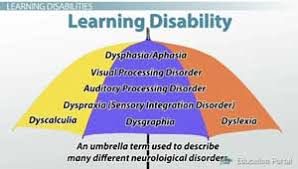
What is a learning disability or difficulty?

This post contains information taken from talk by Beth Tarleton from the University of Bristol at the St John’s Chambers Fair Access seminar on 4th December 2014.

Mencap describe it in this way:

A learning disability is a reduced intellectual ability and difficulty with everyday activities – for example household tasks, socialising or managing money – which affects someone for their whole life.

A parent with a ‘learning disability’ has a IQ below 70; a parent with a ‘learning difficulty’ has an IQ above 70, but both parents may struggle with the same difficulties. Often, mainstream services don’t have experience of working with adults with learning disabilities or learning difficulties [LD] and may not use specialist assessments.

There is little reliable data about how many parents currently face such challenges; there is an estimate of 53,000 in the UK with a diagnosed learning  disability. Dr Sue McGaw (1997) estimated there are 250,000 parents with learning difficulties known to health and social services agencies in the UK.


What challenges do parents face with LD in care proceedings?

Best Beginnings describe it in this way:

Many people who have a learning disability prefer to use the term “learning difficulty”.
A person with an IQ of less than 70 can be diagnosed as having a learning disability.
Around 7% of adults with a learning disability are parents, but most have a mild to borderline impairment, which may make it difficult to identify them as they will not have a formal diagnosis.
Around 40% of parents with a learning disability do not live with their children. The children of parents with a learning disability are more likely than any other group of children to be removed from their parents’ care.
Parents with a learning disability are often affected by poverty, social isolation, stress, mental health problems, low literacy and communication difficulties.

Parents with LD may suffer discrimination from professionals who have little relevant experience and who make assumptions about what parents with LD can or cannot do. This leads to parents with LD often fearing intervention from state agencies. The parents may perceive:

  • Opposition to their desire to parent
  • People assuming the pregnancy was a mistake
  • Assumptions that their parenting capacity won’t improve
  • Negative expectations/stereotypes about their parenting ability
  • Their learning difficulty is automatically equated with an inability to parent
  • People don’t given enough consideration to other environmental or social factors which could impact on parenting difficulties.

There is no consensus from research that children of parents with learning difficulties will automatically face poor outcomes; some studies find that children born to parents with LD are vulnerable due to poor parenting; other studies report that children can do well in the care of their parents if the parents are given support and help.

There needs to be a recognition from support services that parents with LD need life-long support and that support needs to be effective, making provision of information accessible to parents. Effective support services will:

  • cover the family life cycle and a variety of situations
  • offer a co-ordinated approach across services
  • be family-centred in approach and support children in their own right
  • provide accessible and understandable information about parenting
  • recognise the strong association between supportive social networks and the positive psychological well-being of parents with LD
  • include a range of services
  • assess/educate parents in their own homes and using their own equipment, wherever possible.


Case law

Medway Council v A & Ors (Learning Disability; Foster Placement) [2015] EWFC B66 (2 June 2015) deals with the failures of the LA to be fair to a parent with LD.

The court cited from the judgement of Baker J in Re X Y X (Minors) [2011] EWHC 402 (Fam):

132. The last thirty years have seen a radical reappraisal of the way in which people with a learning disability are treated in society. It is now recognised that they need to be supported and enabled to lead their lives as full members of the community, free from discrimination and prejudice. This policy is right, not only for the individual, since it gives due respect to his or her personal autonomy and human rights, but also for society at large, since it is to the benefit of the whole community that all people are included and respected as equal members of society. One consequence of this change in attitudes has been a wider acceptance that people with learning disability may, in many cases, with assistance, be able to bring up children successfully. Another consequence has been the realisation that learning disability often goes undetected, with the result that persons with such disabilities are not afforded the help that they need to meet the challenges that modern life poses, particularly in certain areas of life, notably education, the workplace and the family.

133. To meet the particular difficulties encountered in identifying and helping those with a learning disability in the family, the government published in 2007 “Good Practice Guidance on Working with Parents with a Learning Disability”. In their closing submissions, Miss Ball and Miss Boye contended that such good practice guidance is required because there is little evidence of effective joint working between adult and children’s services and practitioners in each area rarely have a good working knowledge of the policy and legislative framework within which the other is working. They submitted that local authorities frequently do not take account of the fact that, if children are to be enabled to remain in their own families, a specialist approach to a parent with a learning disability is absolutely central to any work that is done, any protection which is offered and any hope of keeping the family together. The 2007 guidance points out, inter alia, that a specialised response is often required when working with families where the parent has a learning disability; that key features of good practice in working with parents with a learning disability include (a) accessible and clear information, (b) clear and co-ordinated referral and assessment procedures, (c) support designed to meet the parent’s needs and strengths, (d) long-term support where necessary, and (e) access to independent advocacy; that people may misunderstand or misinterpret what a professional is telling them so that it is important to check what someone understands, and to avoid blaming them for getting the wrong message; that adult and children’s services and health and social care should jointly agree local protocols for referrals, assessments and care pathways in order to respond appropriately and promptly to the needs of both parents and children; and that, if a referral is made to children’s services and then it becomes apparent that a parent has a learning disability, a referral should also be made to adult learning disability services. The guidance also stresses that close attention should be paid to the parent’s access needs, which may include putting written material into an accessible format, avoiding the use of jargon, taking more time to explain things, and being prepared to tell parents things more than once.”

Another important case is re D (A Child) (No 3) [2016] EWFC1 which looked at how parents could be supported at home to care for their children (although in this case the court concluded that the children should be removed). Suesspiciousminds identified some useful questions put to the court by the parents’ lawyers:

  1. Were the things that happened to this child a result of parental deficiency, or were they frankly things that could happen to any child and any parent, but they were pathologised because of the parents known issues?
  2.  Were the failings here attributable to the parents, or the support provided?
  3. Is there such a thing in law as reparative care, or is insisting that a child needs higher than good enough care simply a social engineering argument in disguise (topical, given the proposed reforms to adoption)
  4. Is a parent with learning difficulties treated differently (or discriminated against) than a parent with physical disabilities?
  5. Is a plan that involves extensive professional support and carers really harmful to a child, or is it the sort of thing that happens all the time with children whose parents are very rich?


Academic Research

Parents with learning difficulties, child protection and the courts

Professor Tim Booth from the University of Sheffield carried out research in this area which was published in 2004. He noted key features of professional practice and service organisation that undermined parents in their parenting and heighten their vulnerability. Parents with LD are disproportionately represented in care proceedings and have a high risk of having their children removed from their care. He noted the impact of ‘system abuse’ or setting up vulnerable parents to fail by depriving them of adequate support:

  • System abuse – meaning policies and practices that harm the families they are supposed to support or protect. System abuse is the unacknowledged scourge of families (see, for example, Booth and Booth, 1998, chapter 9). It is rampant, pervasive and destructive of family life…
  • Competence-inhibiting support – meaning support that deskills parents, reinforces their feelings of inadequacy and undermines their independence.

Parents with LD and advice about the law

There is also research from the University of Bristol in July 2013 ‘What happens when people with learning disabilities need advice about the law’ 

The report concluded that:

The research confirms the findings of previous research that access to legal services for people with learning disabilities remains problematic. The study adds detail and depth to our understanding of the barriers that they face, but also furnishes some of the potential solutions. It highlights the different needs of people with mild learning disabilities and those with more complex disabilities who rely on others to act on their behalf.

The report makes recommendations which centre on:

  • Developing accessible information for people with learning disabilities about the purpose of legal services and how they can be used;
  • Developing information and resources to clarify the routes that family carers and others can take to access specialist legal services on behalf of others;
  • Strengthening the awareness legal professionals have about learning disabilities through professional training and guidance;
  • The promotion of collaborative working between legal services and the social care sector.


The influence of ‘powerful others’

There is an excellent and informative article from the British Journal of Learning Disabilities about parents with learning disabilities and their experiences of having their children removed for not being ‘good enough’ parents. Its a useful reminder that there is no universal accepted definition of what exactly makes us ‘good enough’.

Thanks to Matt Harding for bringing this to our attention.

Accessible summary

  • People with learning disabilities might have their children taken from their care. If they do, what then happens to the parents?
  • I talked to nine mums who had their children taken away from their care. They told me about what this was like and how they felt.
  • This research gives advice to people (particularly professional people) about how to work better with mums who have had their children removed. It also shows that sometimes it is difficult for people with learning disabilities to know their rights and say what they think.

Abstract

There is a recognised risk of parents with learning disabilities having their children removed. Little research has investigated the impact of this on these parents. This article looks at the perceptions of nine mothers with mild learning disabilities and their experiences having had their children removed. Interview data were analysed using Interpretative Phenomenological Analysis (IPA). Findings reveal the struggles mothers with learning disabilities faced being ‘suitable mother’ – including presumed incompetence and scrutiny of parenting. Participants’ responses to having had their children removed are looked at and support reviewed. Finally issues of power were highlighted throughout Participants’ accounts and the impact of this is discussed. Clinical implications indicate areas for service improvement.

Conclusion

There appears to be an overwhelming influence of ‘powerful others’ upon the lives of mothers with learning disabilities. Before they even have a child, society seems to suggest they should not. When they do have their child, however, they appear to have to be better than ‘good enough parents’ and seem set up to fail by the standards of those monitoring them (Chinn, 1996 cited in Edmonds 2000). When the mothers do ‘fail’, powerful others remove the child. There seems little negotiation in this process. Few mothers appear to have advocates and the child is often then adopted –a decision sometimes not even made through court. To the mothers, the decision appears a foregone conclusion over which they have little control or choice.

What then do the mothers do? How do they cope? They are left feeling helpless and bereft. They could turn to others for help but past experience has taught them that this may not be beneficial. Moreover, for many mothers it might mean turning to those who removed their child in the first place. Should mothers reveal their true feelings it might only serve to prove it was right to remove their children. Worse still, it could support the removal of yet more of her children. The mothers’ voices and feelings therefore seem to remain hidden and they attempt to block out upsetting thoughts and reminders. It appears their only solace is that one day their child might return. Meanwhile any contact will suffice. However, all this once again appears to rest in the hands of powerful others.

Useful resources

Books/Assessments

  • ‘Care Proceedings and Learning Disabled Parents: A Handbook for Family Lawyers’ by Abigail Bond. A handbook for all those involved in care proceedings where one or both of the parents is learning disabled. The book sets out the relevant governmental policy and guidance in this area; examines the statutory framework relevant to adult learning disability social workers and children s services social workers where there is a parent with a learning disability; considers and analyses the legal and practical arguments and issues likely to arise in learning disability cases.
  • Competency based assessment of support needs: PAMS 3.0 is a complete Parent Assessment Application used by social workers, psychologists and other professionals across the UK and abroad. Developed by psychologist Dr Sue McGaw.

Guidance/blogs

Organisations


The impact of investigation and the need for professionalism

We know that if the professionals in the child protection system are told that a child is being hurt or at risk of being hurt, they have to act. And that can sometimes mean an intrusive investigation into the family and some difficult questions. 

Here we set out some of the words of parents who have been investigated and no concerns were found – and how they found the experience. 

We hope that all who work in this field can recognise the potentially enormous impact of their interventions and will appreciate the importance of remaining professional in all their interactions. 


One mother’s story

This mother had to deal with an investigation following something her son said at school. Nothing came of the investigation but she is still dealing with its aftermath and her shock at the attitude of some of the investigating professionals. 

There were no concerns about my son until an unqualified student with no experience of autism turned an informal chat into a ‘therapy session’ in which she questioned him as to why he ‘looked sad’. This led him to become anxious and confused. A referral was made on the basis of what he said during this session.

We were not informed that a referral had been made and my son was sent home and was in great distress when he tried to explain what had happened.

I think I was so shocked at what had happened to us because I had spent 10 years putting everything I had into the children, particularly my son (with SN and who we had adopted) and my daughter who had died of cancer.

I remember thinking ‘what more do they expect of me? What more do I have to do to prove that my children are the most important thing in the world, that I would do anything to keep them safe?’

The thing that had kept me going after my daughter was the knowledge that I had done everything I could for her and I had felt proud that we had fought for our son. That he had been handed to us out of the blue because a relative couldn’t care for him and I had dropped everything to take him as one of our own.

But none of that seemed to mean anything and ever since I feel I have lost my credentials as a good mother. I have never been a brilliant or perfect or complacent mother but I knew that I did my best.

And all that seemed to have been snatched from me. For no good reason. Through the unprofessional behaviour of others. To those professionals it was a routine thing that was done and dusted and nothing came of it.

Not to me.

I have done the initial complaint and the response was rubbish. I am still working up to the second one. It is one of the very few times I have wished I was rich. Just so I could pay a solicitor to deal with it (even though its not a strictly legal matter).

The arrogance is breathtaking. I quoted paragraphs from the area guidelines and their own policy and the person dealing with my complaint just ignored the things he couldn’t justify!

I know I have to get on with it but ….GAH…I hate it.


Another experience

I think it shakes your confidence in your ability to keep your child safe to be honest,  and your trust in the health profession as well. Once my son was referred on every professional acknowledged that I was a knowledgeable and experienced parent who handled ds sensitively and that helped a great deal.
Five years after my son’s diagnosis I had my daughter and she restored my confidence, I escaped the pnd and puerperal psychosis, my daughter was a model baby and when she was diagnosed with autism at two it was so smoothly done (No one would have dared doubted me by then).
The anger has gone, I look back and just feel sad now and grateful in a way that it was autism because had it been something life threatening I’m in no doubt that my concerns wouldn’t have been listened to or acted upon until it was too late.
I’ve done the tribunal and judicial review to get my son into independent specialist school so you have my sympathy but I learned from my complaint to keep meticulous notes and they helped enormously.


My son was my fourth child, I was never neurotic, I had never expressed any concerns about the others, never needed any support and the others thrived. Suddenly that all counted for nothing, they totally dismissed that I knew what the average child should be able to do and my son was nothing like average.
I even said I thought it was autism (because my son presented as classical autism and I was looking for reasons why) but that was seen as being proof it was MBP. The psychiatrist himself asked for referral for assessment for autism because it was so obvious and yet the GPs thought they knew better than the psychiatrist and the SALT.


Their arrogance astounds me to this day.
The HV was forced to retire soon after my complaint when a baby nearly died because of her advice but the GPs are still there and it’s an open secret in this area that if a child enters school with developmental difficulties that haven’t been noticed or addressed the child is at that practise so my complaint counted for nothing in the end.
Hang in there,  go through every complaints procedure, it’s bloody frustrating but I got a little pleasure knowing I was giving them extra work and they were shit scared up before the health authority which pleased me no end.

You may also be interested in our post  – what if the doctors don’t believe my child is really ill?

Ehlers Danlos Syndrome

You may be interested in our post here about the issues around certain genetic conditions and accusations of non accidental injury or Fabricated or Induced Illness (FII).

Meeting at the Houses of Parliament

Justice For Families in collaboration with EDS UK is holding a Family Law Meeting in the Houses of Parliament on 24th June 2014, as a response to all the allegations of child abuse and FII reported in the EDS community.

Mr John Hemming MP and Lara Bloom, Chief Operations Officer for EDS UK, will host a gathering of professional minds to discuss Ehlers within Family Law and NAI’s.

The confirmed speakers so far are:

Professor Rodney Grahame

Professor of Clinical Rheumatology – Senior Consultant in Clinical Genetics – Extensive experience in complex cases involving allegations of serious non accidental injuries especially those concerning scientific or medical issues.


Dr Anand Saggar

Senior Consultant in Clinical genetics.


Paul Storey QC and Alexa Storey

Barristers with extensive experience in complex cases involving allegations of serious NAI.


Time and place

The event will take place on June 24th from 6.30 – 9.30 at the MacMillan Room at Portcullis House SW1A.

If you would like to go, please email Jacque Courtnage at ja**************@**********ng.name

as attendance is by invitation only.


What if doctors don’t believe my child is really ill?

This is an issue that has provoked a lot of debate and comment; parents are concerned that they are being accused of hurting their children when in fact their children have serious medical conditions. Some parents feel that if they try to bring these conditions to their doctors’ attention, they run the risk they will be accused of ‘fabricating illness’. 

We agree this area needs debate. Here is a piece from a parent who has been involved in this scenario. We would welcome any other contributions from people with knowledge of these issues.

You may also find this post useful – the social worker tells me my child has been hurt.


A medical condition – or a non accidential injury?

I have a concern around the subject of rare genetic connective tissue disorders such as Ehlers Danlos Syndrome and the high levels of non accident injury and Fabricated or Induced Illness (FII) accusations made against parents with children of this condition. A ruling was made last year and published in Family law week I believe, regarding non accidental injury and EDS.

Having spoken in large group settings organised at the Ehlers Danlos Support UK conferences, there seems to be a large number of Mothers who also have the same condition of FII. The numbers of parents reported to social services, that have gone on to be seen one particular doctor are out of proportion for one small group of the population, the last quote was 50-60%. I can provide contact details for this doctor if you want to verify the information. There is I gather debate if FII even exists, or if the symptoms are of a personality disorder. I am sure that there will be in the EDS community the same levels of FII/personality disorders as there is in the rest of the population.


So why do I think there are so many reports of this by professionals to social services?

Well there is a high proportion of Autistic diagnosis in the community apparently.

There have also been brain scans showing that the Amygdala works differently in hypermobile people, where as someone with antisocial personality disorder would have not much going on we seem to have far too much going on here.

We have issues with pain, and Anesthetic not working.

There is still so much to be found out, there is some interesting work done by Dr Driscoll. She has theories about mast cells and pressure levels in the brains of EDS people.

The parents will have not had their medical needs met and once they understand what has happened they will be keen for the children not to suffer also as they have. When you discover the complexity of what has been going on in your bodies and written off for so long, you go through all the stages of grief for yourself and for your children.

There are often undiagnosed secondary issues, for example it was only in November 2013 there was a proven link between sleep apnoea and EDS. There are complex GI issues and Neurological /cardiac issues from our autonomic system not functioning properly. These will interfere with the cognative ability of the parents and children. They will make them appear to have a primary mental health issue which is a secondary mental health condition, heal the physical cause and they will not have anxiety and depression. We look like there is nothing wrong with us, we don’t complain and we get on with things.

We are not helped by the fact there are two names for what is through to be the same condition, some doctors seem to have different ideas and the two charities not working together.

Right now I understand the department of Health, NHS national genetic EDS clinic think EDS and HMS (Hypermobility Syndrome) are to be treated as the same condition along with EDSUK, yet some other high profile NHS hospitals along with HMSA have other ideas.

Here are some links

http://www.hypermobility.org
www.ehlers-danlos.org

You can also visit the author’s Facebook page for more information about EDS and hyper mobility.

Case Law

We think these cases will be of interest

The case of Devon County Council v EB in 2013 where the Judge rejected the LA case that the parents were responsible for inflicting non accidental injuries – the mother had Ehlers Danlos syndrome and the father joint hyper mobility.

But see also Re J & R, decided shortly after Devon County Council v EB where the parents were not successful on similar arguments – the Judge stressed the importance of taking into account ALL the evidence and was not so impressed by the parents’ evidence in this case.

In Re B 2014 the parents were reunited with their child after the court found that he probably had EDS Type III which would have made him more vulnerable to subdural bleeding.


Further reading

You may find interesting this article from Gene Reviews about diagnosing Ehlers-Danlos syndrome. Also this article from PubMed about sleep disordered breathing for those with the syndrome.

Words don’t come easy

This contribution is from a group of ‘birth’ and ‘adoptive’ parents who started discussing this issue on Twitter. What is the impact of the words we use to talk about people in the care and adoption process?

Do we need to be more considerate of or more challenging about the terms we use? 

You may also be interested in this blog post from an adoptive parent. 


Does the terminology associated with adoption need to be challenged?

The current adoption climate in the UK has seen the use of many terminologies being uttered that evoke negative emotions for all involved. Adoption in itself is very emotive for all involved especially where consent has been dispensed with.  So can the use of some of these terms be considered as  “hate speech”? Possibly, possibly not, but what is clear is that we need to remove the use of some of these terms as it builds an even greater divide between the “birth family” and the “adoptive family”.

Whichever side you find yourself on, it is the child at the end of the day that is most affected by whichever term is used.  Some can denote that the one family is either lesser or even better than the other family, leaving the child in the middle feeling they are being torn in two having to choose sides. This has a devastating and lasting effect on the child’s identity, self worth, emotions and psychology not to mention a test on their loyalty to the families involved.

So let’s look at some of the terms and the emotive relationships associated to them:

Birth Parent

Person who gave birth is nothing more than a ‘surrogate’ or ‘breeder’. Denotes derogatory connotations. If an adopter has a blood child and an adopted child, it segregates the two making the adopted child always feel isolated.

Genetic Parent

Person is nothing more than a donor of an egg or sperm

First / Second Family

Renders the essence of a family unit moot. Undermines the role of permanence and stability. Suggests families can be discarded summarily and breeds lack of respect.

Forever Family

This is considered one of the most offensive terms in adoption. There is not such thing as a ‘forever family’ as the whole process of adoption contradicts the entire term. It is also suggestive to children in families who have not been separated by adoption, that their place in the family is temporary which has devastating consequences in terms of building trust, relationship alienation etc.

Natural Parent

Who will carry this term (adopter or other?) and is being a parent a ‘natural’ thing so that assistance is never required at any point? Everyone needs help and guidance as children do not come with manuals and no two children are alike. Whoever coins their family as ‘natural’ will them imply that the other family is ‘unnatural’.”

Real Mother/Father

Adopters are made to feel they are artificial parents

Mother/Father

The use of this term for adoptive parent dismisses the emotional and psychological link the ‘biological’ parent has and will always have, with a child who has been adopted.

Family

Many adopters feel they should have the use of this term as opposed to the inclusion of the ‘birth’ family within the term, but is a ‘family’ simply all who love and care for the child and can simply be seen as a ‘cohesive family’ ?

Adoptee

Denotes that the child is ‘different’ and unloved by those who gave birth to them. In the UK, this term is becoming synonymous with having come from an abusive home, hence they were removed for adoption. Not all children are removed from abusive or neglectful homes and parents who did not love them. Many parents who have lost their child to adoption will go to extra-ordinary lengths to fight for their child’s return. Another obvious observation is that if ‘birth’ parent is used does that make this child a ‘birth’ child?

Parent

Not everyone can parent. This applies to ‘birth’ parents as well as ‘adoptive’ parents. So do we keep the term parent for both?


The  impact of terminology

The emotive responses can either have positive or negative connotations and more suitable terminology must begin to be accepted, especially amongst the legal fraternity and social care societies as it is from there that the initial steps can be introduced.  So what do we use? There is much debate around this very subject with no definitive conclusion.

Do we start referring to “birth” parents as the “Alpha” parent/family while “Beta” is used for extended families, “Gamma” for Step families and “Delta” for the adoptive family? Does this make one again lesser than the other or is it simply a matter of numeric’s. After all, without the “birth” family coming first, there would be no adoption?

Literature and research accepts that the majority of ‘adoptees’ will at some point seek out their ‘birth’ family. How reunions turn out often depends on how the child, adopter and ‘birth parent’ have associated each other’s role based on the terminology that each has grown accustomed to or been offended by.  If the reunion is a success, the adoptive family, especially the parent, will often feel sidelined and abandoned whilst the adoptee reconnects with the biological ties that will forever bind them to their ‘birth’ family.

We need to be realistic and frank if we are ever to get to the bottom of all this, despite everyone’s sensitivities. Adoption is nothing more than giving a child which is not your own, a potentially safe environment to grow up in, but how is this different to growing up with grandparents or extended families? Would you raise an eyebrow if a child referred to their  grandparents as ‘my adoptive mom’? So is the use of Adopter still appropriate and should this term perhaps be replace with “Guardian”?

As adoption can be cross-cultural, do we also need to consider religion and culture in the terminology as translations can change an entire meaning? Or do we stick with the English speaking populous and leave the rest to be interpreted as each culture and religion sees fit?

Will changing the terminology go a long way to building a more constructive framework and solid foundation for the child involved and even possibly lead towards successful open adoptions?

What if we used similar words with similar meanings but either spelt or pronounced differently?

We call two grandmothers in a family different things so that we can distinguish them e.g. grandma, nan etc.., and one is not loved more or less than the other.  The same can be done for mothers for example, so that the child knows the difference but the terminology would be different for every family.

Some possible suggestions are:

Female Carers: Mom, mommy, mother, mama, mammy, mum, ma, mummy, etc.

Male Carers: Dad, Father, Pops, pappy, daddy, papa, pa, etc.

It has to be argued that this has to be the better option for all involved but more so, for the child. If you accept that, then why not go the extra step when referring to ‘Birth’ and ‘Adoptive’ parents both  as ‘Parents’? Similarly, both sides can be referred to as ‘Families’ because that is pure and simply what they are and will always be to the child.

Removing the adjectives and verbs will improve long term outcomes for the child and that dear reader, has to be what is in every child’s best interest.


How do child protection issues get reported?

From 2011 – 2012 over 600,000 children were referred to local authority children’s social care services because of concerns about their welfare.  This number decreased by 1.9% for the year end 31st March 2013. See the most recent statistics from the Department of Education. 

In this post we look at the routes of referral and what happens when a referral is made.


Structure of child protection in England

The Department of Education is the government department which is responsible for children’s welfare. It will consider what changes to the law and policy are needed and issue guidance for those agencies who deal with children such as schools and local authorities.

The Children Act 2004 set up Local Safeguarding Children Boards (LSCB) to ensure all the relevant agencies work together, such as local authorities, health authorities and the police. Each LSCB has to produce an annual report.

The key statutory agency involved in child protection is the local authority (LA). Each LA has a Director of Children’s Services (DCS) who has ultimate responsibility for the provision of local education and social services for children.   An elected local councillor with be the ‘lead member’ and the DCS, the lead member and the LSCB work together to produce and implement child protection procedures.

The main policy guidance is Working Together to Safeguard Children which first came out in 1999. The main statutes are Part IV of the Children Act 1989 and the Children and Families Act 2014


Who reports concerns about child protection?

The public

  • By calling the child protection team of their Local Authority; the emergency team can be called out of hours. The telephone numbers should be easily available; or
  • If it is an emergency, call the police; or
  • telephone the NSPCC on 0808 800 5000 or email he**@*******rg.uk.T

There is a useful article from the Guardian, discussing what members of the public can do if they witness something that makes them worried about a child. 

The police

The police have special powers to take a child into police protection for up to 72 hours without getting the court’s permission first. They should only exercise these powers in truly urgent and exceptional circumstances. They have the power to take a child to a place of safety – such as a hospital – or stop someone else trying to take the child away from a place of safety. You can find the police powers set out in section 46 of the Children Act 1989.

Schools and hospitals

All professionals who have regular contact with children ought to have clear procedures in place for how they will respond to any worries about a child they see. There should be someone who is clearly identified as the designated child protection teacher or nurse/doctor who will deal with the concern when it is first reported.

There is at the current time no legal requirement to report suspected child abuse. There are many who believe that this should change  – see for example the campaign following the death of Daniel Pelka.

Here is a useful article from the Patient.co.uk  website for doctors which discusses how to recognise abuse or a child at risk.

Risk assessments by Cafcass

Under section 16A of the Children Act 1989, if you are involved in ‘private law’ proceedings – i.e. you are asking the court to help resolve a dispute between parents about their children – an officer of Cafcass may have to carry out a risk assessment if he or she has cause to believe a child is at risk of harm and may have to then refer the matter on to Children’s Services.


What happens when the referral is made to the SW Team?

The team must decide quickly what action to take; they have one working day. If the team decides it needs more information to make a decision it will start a process of further assessment.

The initial assessment should be done within 10 working days of the referral. If this assessment indicates serious concerns then a strategy discussion takes place to decide whether or not to start an inquiry under section 47 of the Children Act 1989. Usually a ‘core assessment’ should take place to gather the relevant information from the parents, the child (if old enough) and other professionals. Core Assessments should be finished within 35 working days of the referral.

If the section 47 enquiry shows there are serious worries about the child, the LA then has decide what to do to protect the child. The more serious and urgent concerns should mean that  the LA make an application to the court for a care or supervision order. Other concerns may mean that the LA write out a ‘child protection plan’ so that everyone knows what they need to do to keep an eye on the situation or to take active steps to stop it getting any worse.

If the situation is VERY urgent, the LA can apply to the court for an Emergency Protection Order under section 44 of the Children Act which gives the LA permission to remove a child from home for up to 8 days. Another emergency option is to apply to the court under section 38A of the Children Act for an exclusion order to ban someone from remaining in or coming to the family home. Or the LA could ask the police for help, as the police could use their special powers to remove a child for 72 hours.

Have a look at this ‘map’ of the child protection system from the Children’s Legal Centre.

.


Child protection conferences and plans

If the outcome of the section 47 investigation confirms that the situation is worrying enough to need continued LA involvement,  then a child protection conference must be held within 15 working days of the last strategy discussion. The family, and all the relevant professionals will be invited to this meeting, as well as the child if he is old enough to understand what is going on.

Those at the conference will need to decide whether a child protection plan is needed.  These plans replaced the child protection register in April 2008, but the criteria for inclusion remains the same.

Plans should be agreed by everyone where possible and set out

  • the intended short and long term outcomes are for the child
  • how children’s services will monitor the child’s welfare
  • what needs to change to reduce the risk of harm to the child; and
  • what support will be offered to the family.

The child protection plan should be regularly reviewed; the first review should happen within 3 months and then at six monthly intervals after that. 


What happens if the situation doesn’t get better?

Then the LA will need to seriously think about asking the court to make a care or supervision order, which could mean that the child is taken away from the family. If the LA decide that things are so serious that they need to go to court, they should start the ‘Pre-Proceedings Procedure’ and they will explain to the parents in a letter why they are so concerned.

This information from the Government explains the pre-proceedings procedure and what parents need to do.

If the situation suddenly gets very bad then the LA may decide it needs to act very quickly and may apply for an Emergency Protection Order, as explained above.

See further our post about Care and Supervision orders and Interim Care orders.

So you want to be a Social Worker?

An interesting perspective on the job of social worker can be found in Hilary Searing’s blog The Barefoot Social Worker, written from a radical and libertarian perspective.

She comments in her post So You Want to be a Social Worker?

Politicians, policy-makers and many middle class professionals are confused about the social work role. They seem ambivalent about the social worker’s use of authority and presume that all social work is simply ‘social care’, which is misleading. They choose to depict social work as a helping profession and as the answer to many social problems – including those that are an inherent part of the socio-economic system and require political action. Working class people, on the other hand, know that the provision of social services is closely linked with systems for monitoring, surveillance and control and are in no doubt about the social control function of social work.

Social work is not an easy job but there are many rewards for those who never lose touch with what is important – to understand and respect the life experience of clients and never forget the social and political context in which their problems arise. At the heart of social work is the task of alleviating the stress of clients living in poverty and in impoverished communities, where divisions arising out of class, ethnicity and religion are sometimes entrenched. Poverty and inequality are often at the root of many social problems and social work must recognise the part that class plays in perpetuating these problems.

She also poses the question – what has gone wrong with Child Protection?

Read the post here

She concludes:

My argument is that there needs to be a clearer focus on the acute end of the spectrum of children’s services. There is plenty of positive work going on but it does not get the support it deserves. The work is both challenging and rewarding and the existence of stable and supportive teams is crucial to the development of good practice. We desperately need strong, imaginative and constructive social work if Children’s Services are to improve their reliability in making the best possible decisions about seemingly intractable situations. 

Response to Commentators #3

A question from one of our readers ‘Justice for children’.

How are you going to prevent paedophiles from working in your new and improved organization?

All traditional insitutions are already tainted and they have lost credability in the public’s eye. It’s safer to keep children at home so that parents can be assured of their children’s lives not being destroyed, hence they demand actions instead of words.

How do you guarantee that you don’t have rotten apples inside your organization who get free access to vulnerable children?

Our reply

We don’t have any access to any children. This is a site set up to offer information about the child protection system.

Nor do we accept that it is always ‘safer’ to keep children at home. Most young children who are killed, are killed at the hands of their parents or carers. At home.

We do want to have a debate. But we are clear that we don’t accept the majority of the conspiracy theories and it sounds like you might be a proponent of one.


@justiceforchildren

How are you preventing paedophiles to work in school and nurseries?
Not possible. Therefore… Are you keeping children at home all time?

Second question:
How are you preventing parent to abuse children?
Not possible…..

I think you asked a very silly question in your post. Sorry but there is not any intelligent answer to that.

Edit