Author Archives: Sarah Phillimore

Violence and the Family Courts

I am grateful for this post from ‘J’ who contacted the Transparency Project, wanting to share her experiences of going through the family courts and trying to deal with a violent ex partner. 

The Transparency Project will publish Guidance in the new year on the law and practice in such cases involving violent or allegedly violent parents who seek orders relating to their children. Please comment or contact me if you have a story you wish to share. The Transparency Project also hopes to organise a conference to launch its Guidance and discuss these issues. Is the family court really failing so badly the victims of violence and their children? And if so, what can we do about it? 

My Story

My experience started in 2014 when my violent ex applied to court for access to our child.
This was a man with 16 violent convictions, several against me and other partners.
I had managed to end the relationship in 2013. I got a non molestation against him, yet I was continually stalked & harassed by him to the extent that he was arrested and remanded in prison because of it.

I had rang the police 40+ times, 2 blue lights from Oct 2013 – Dec 2013.
He further harrassed me from prison with letters and was re arrested in prison due to that.
He was extremely violent to myself during the relationship and also my children.
He is diagnosed with 4 personality disorders back in 2008 ( unknown to me until court hearing started ).
Borderline personality disorder
Histronic personality disorder
Avoidant personality disorder
Paranoid personality disorder

Cafcass had several concerns regarding him and his violent history so the case was listed for fact finding hearing.
I was cross examined by a man that had tried to kick our child out of me at 10 weeks pregnant
He was extremely aggressive in the court constantly with the judge having him removed several times.
My barrister resigned from the case as he had threatened her also.
He was stabbed in broad daylight in the street half way through this case with a family I had proved to the judge he was fighting with constantly.
His lifestyle and violence was always present.

Yet the judge handled him with ” kid gloves ”
He only paid the fee for court £260.
Never paid another penny even though he was working.
He used my legal aid to get him through court ligitant in person .
As my legal team did all the court orders etc.
My police disclosure alone cost over £3000 funded by my legal aid ( that I contributed to until I had to move home for my safety & my living costs were highly increased ).
I was constantly called a whore & a slag in the court room in front of the judge yet all he got was a telling off.
Fact finding was in my favour as everything I had gone through we had documentation for from police etc.
But the court still said that he could have supervised access.

This put me and my child at further risk as the cafcass offices weren’t safe for me to attend I fought all the way to try stop any contact suggesting indirect contact, yet the history and indeed behaviour of this man in court and out didn’t seem important at all to the judge.
All I got was just because he’s violent don’t make him a bad father , something I strongly disagree with.
In August of this year he was arrested at the court by police for sending his 16 yr old daughter threatening messages.
The police sat in the courtroom with him.
Yet the judge seemed to not acknowledge this at all.

This was a man with extremely violent history trying to get access to a young child, yet was threatening his eldest daughter and nothing was said about it.

I have been to hell and back for 2 years having to face that man multiple times.

He would just email the court if something wasn’t going his way and then another hearing listed
I got out of the toxic relationship alive with my kids just to be thrown back into a extremely unsafe situation month in month out at the hands of the family courts.
I felt like a criminal sat in that court when all I was doing was trying to protect my child from a dangerous and violent man.

The system is flawed and it puts children at risk everyday

Lessons from the Ellie Butler case

These are the notes of a talk given by Sarah Phillimore to the London Resolution group on 3rd October 2016. Further notes of the contributions given by Lucy Reed and Andrew Pack, along with discussion with the audience, will be available shortly on the Transparency Project website. 

Sarah concludes that we all need to be aware of the dangers of confirmation bias and how much we need to tell ourselves stories to make sense of difficult and painful issues. 

“Once free from the shadow of blame… they are going to change” [Hogg J]

The changing perceptions of the nature of Ben Butler.

“I was impressed by the father. He came through as a reflective, thoughtful individual who at times over-reacts through frustration. His manner can be seen by some as rude and aggressive but the mother says there is a much softer side to him. She saw the look of love in his eyes and face…” [para 626 Jmt Hogg J 2012]

“I can’t cope anymore.. woke up in a rage already… been in place so many times… My hands r shaking… One more mistake I am going to lose it.. ur pushing my hate…” [text message from Ben Butler on 19/10/13. 9 days later, he killed Ellie]

“My house is a bad house” [note taken by foster carer of what X reported]

“You are a self-absorbed, ill-tempered, violent and domineering man who, I am satisfied, regarded your children and your partner as trophies, having no role other than to fit in with your infantile and sentimentalised fantasy of family life with you as the patriarch whose every whim was to be responded to appropriately.” [Wilkie J sentencing Ben Butler in June 2016]

Why were such different views held about Ben Butler?

The dangers inherent in imposing our own ‘narrative drive’ upon the facts we know may lead us to ignore other facts or see them through the particular lens of our own confirmation bias.

“Good practice would suggest that when parents are considered to be threatening or hostile, any presumption that they are different with their children should be rigorously tested” [SCR 27/56]

“Hogg J denied as she was of the text messages and an understanding of the violence endemic in the relationship, found the evidence of both parents to be impressive and truthful. In fact what is now obvious is that both the mother and father were being untruthful about the nature and quality of their relationship” [para 48 jmt King J 2014]

The courts can only decide the case that is put in front of them. Accepting that principle, we need to be clear:
• What facts we put before the court – Judges can only decide the case in front of them.
• How those facts should be analysed – but Judges also bring their own interpretations to the facts
• And just how much weight the ‘balance of probabilities’ can bear – is it ever wise to ‘exonerate’ on the balance of probabilities?
• See further https://childprotectionresource.online/achieving-best-evidence-and-use-in-children-act-cases/

Some features of the evidence to consider

Paragraphs from 2012 court judgment
Seeing the case through a lens – ‘a tragedy for a loving couple’

para 51: ‘I have not read the judgments of HHJ Atkins dated 29th January and 28th April nor the summing up to the jury of HHJ Stow in March 2009 as I did not wish to be influenced in any way by another Judge of first instance’ [presumably therefore did not read psychiatric report ordered in February 2008]
NB No mention is made of findings that parents threatened MGP, other than to record that this finding was made.
Para 344: …’other than the injuries found in Ellie’s head [what about burns to head and fingers] …she was a well cared for infant …If that was the scenario, then there is no culpability, it was a reaction to a frightening situation and event’.
Para 507: while pregnant with Ellie’s sibling, the mother committed benefit fraud. [Does not mention other incidents of dishonest behaviour/evasion? Lack of analysis or knowledge of extensive background of criminal background and extensive deception]
Para 509: parents undertook ‘secret’ testing of Ellie’s sibling that confirmed Ben Butler was father of both; known since May 2010 and kept from lawyers. [Dishonesty/evasion]
Para 519: – mother and father did not live together. Saw each other a few times each week. ‘He is all I have’. [no analysis of clear vulnerability of mother and her dependence on Ben Butler]
Para 572: ‘He cannot say what the future holds for the relationship between the mother and himself. He could not commit to living with her’. [It appears the parents never lived together]
Para 618: ‘he accepted that in the past he had not co-operated with the LA … he accepted that he had not helped prepare the life story work for either Ellie or X when he should have. He accepted that he had criminal convictions in the past and more recently. He accepted he had made mistakes. [father’s account appears to be taken at face value]
Para 626: I was impressed by the father. He came through as a reflective, thoughtful individual who at times over-reacts through frustration. His manner can be seen by some as rude and aggressive but the mother says there is a much softer side to him. She saw the look of love in his eyes and face….[Mills and Boon have no place in court judgments?]

Note comment SCR 21/56 ‘In her conclusions the Judge works through the parents’ shortcomings and in many instances frames them in the context of being victims of a wrongful conviction and the difficulties they have suffered as a result and seems ready to accept their explanations for their unhelpful behaviour She states “I was impressed by the father” and refers to the parents “opening up” and states that once free from the “shadow of blame” “they are going to change”
SCR 21/56 – comments from IMR for Children’s Social Care:  “[Mrs Justice Hogg] having decided that the medical evidence in respect of the injury to [Ellie] did not hold, then chose to ignore all the other evidence. She chose to dismiss the evidence of the parents’ hostile and non-co-operative behaviours and appeared to conclude that it was to be expected given that Children’s Services had removed their children.”

Which lead to failure to analyse the father’s prior criminal convictions and propensity for violence

Para 531: ‘[the mother] denied the LA’s suggestion that theirs was a relationship in which domestic violence, bullying and controlling behaviour by the father featured. She denied that he abused her verbally or physically’ [would be interesting to know how mother cross examined about this, particularly in light of father’s previous violent history as documented in probation records and in light of extremely disturbing diary entries from mother about what going on in 2012]
Para 587: [Fathers 999 call] ‘That’s when I put her…. And she fucking. I leant her back too quick. Fuck sake come on’. [No consideration of why he ‘leant her back too quick’ in light of his propensity for violent reactions]
Para 610: ‘Dr Haswell said he saw the parents arguing, the father poking the mother in the chest and forehead and being aggressive’.[This was glossed over, even portrayed as a ‘positive’]
Para 627: ‘he acknowledged his criminal convictions… I note the convictions include assaults on adults, not on children. I accept that he can act out of frustration… –
[contrast with what is said in SCR 5/56: ‘ In respect of [father’s] health: records describe a pattern of frequent injuries related to alcohol, assaults and fights as well as a history of depression. Police and probation records show a long history of offending, including a 3 year 11 month prison sentence for armed robbery with violence and witness intimidation, charges of ABH and an assault on a pregnant ex girlfriend. Many other alleged incidents did not proceed to court as witnesses alleged victims would not pursue a case against [the father]. He frequently breached community orders and failed to co-operate with Probation staff. He reported a history of being sexually abused as a child by a relative, had a history of self harm and was referred to psychotherapeutic help. [The father] appears not to have held employment for many years].

Exoneration – The action of officially absolving someone from blame

Para 488: ‘not finding an answer is not to me the same as saying somebody must have done it’ – If I may say, wise comments from a very experienced practitioner and one of which doctors and lawyers alike should take heed. [Just as not finding an answer does not equate to ‘exoneration’]
Para 659: ‘in fairness to all I should try to go further. Ellie and X when they grow up need to know with as much clarity as possible what happened to Ellie in February… [Just how much weight can ‘the balance of probabilities’ take?]
Para 660: the parents have suffered enormous loss as a result of the findings. If I can exonerate them from wrong doing in February 2007 I should do so. … Para 672: in my judgment he is exonerated from causing her any inflicted injury.

SCR 8/56: The Local Authority was required by the court to send a letter to all agencies who had worked with the family to inform them of [the father’s] quashed conviction and exoneration and directing that this letter should be prominently referenced in their files. It included the statement “[the Judge] concluded that not only was she satisfied that [the father] never caused harm to his child, in fact there was an innocent explanation for his child’s suspected injuries”.
Working on ‘balance of probabilities’ is such ‘exoneration’ ever appropriate? Simply say – no finding made. Why take next step to positive exoneration? ‘

Conclusion – Key finding of the SCR

SCR 19/56 Professionals who had read the [2012 Judgment] concluded that it handed all the power to the parents and did not leave ‘even one percent change that it might be different’. Given the known pattern of the parents’ behaviour – lies, aggression, threats, missed appointments, “disguised compliance” and resistance, one IMR author commented that: “the decision made that allowed the parents to dictate who they will and will not work with is extremely concerning practice that had a monumental impact for [Ellie] and all professionals involved and should be reviewed with courage and conviction to shape future decision making”

Ellie Butler Timeline

2006 Parents meet; by this time the father had a number of convictions of attempted robbery, intimidation of a witness and assault. Sentenced to 3 years in prison [2012 judgment para 11]
30.12.06 Ellie born. Parents in ‘casual relationship’ and were not living together. Ellie moved between parents’ homes.
07.02.07 Ellie suffers burns to her forehead and index fingers when in care of father. He claims ‘total accident’.
08.02.07 Ellie take to GP who did not raise child protection issues
15.02.07 Ellie in care of her father. Ellie was ‘soft and limp’. Ambulance called. Hospital found intra-cranial and retinal bleeding. Father charged with assault and cruelty.
Ellie had very unusual combination of laryngneal cleft and cyst at the back of her tongue.
27.02.07 Strategy meeting concludes Ellie’s injuries were not accidental.
05.03.07 LA issue care proceedings on basis Ellie had suffered inflicted head injury and burns in care of parents. [What was threshold criteria?]
09.03.07 ICO in respect of Ellie
16.03.07 Ellie discharged from hospital and in foster care.
24.07.07 Ellie moves to live with MGP under ICO. They apply for SGO
29.01.08 Findings of HHJ Atkins that father caused non-accidental injuries to Ellie and her mother failed to protect her.
Feb 2008 Psychiatrist instructed to report on both parents
March 2008 Mother had missed 13 visits to Ellie [SCR 7/56]
28.04.08 Findings of HHJ Atkins that parents had not been open and honest and had lied about their relationship. Both had intimidated and made various specific threats towards the MGP.
14.08.08 HHJ Atkins makes SGO to Ellie’s MGP.
24.03.09 Father convicted of assault and cruelty; sentenced to concurrent terms of 18 months and 1 month imprisonment.
May-Dec 2009 Mother had no contact with Ellie; she had gone ‘into hiding’ after becoming pregnant with Ellie’s sibling X.
07.09.09 ‘X’ born.
October 2009 Father released on bail pending appeal against conviction and sentence.
2010/2011 SCR 8/56 both [parents] were convicted of criminal offences, had numerous health problems (including [mother] having 16 hospital admissions in 8 months) and a poor record of contact visits.
07.02.10 Mother arrested for shoplifting: had young baby [X] with her
21.03.10 X removed from the mother by the police.
22.03.10 Care proceedings commence for X
May 2010 Parents conduct ‘secret DNA testing’ of X; confirming Ben Butler is father of both children. Parents do not tell their legal teams or LA, allowing others to believe that the children were not full siblings.
17.06.10 Father’s criminal convictions quashed. New medical evidence raised doubt as to safety of conviction. Mother seeks re-hearing of fact finding but legal aid is delayed.
Jan 2011 Ellie’s mother applies for re-hearing of fact finding, supported by father.
Feb 2012 MGP withdraw as SGO for X (at this time believing that they were not full siblings)
26.05.11 HHJ Atkins granted application for re-hearing of fact finding
Jan 2012 SCR 8/56 X had a period of serious illness but still [the mother] declined to visit.
08.05.12-06.07.12 Hearing before Mrs Justice Hogg
2008 findings of fact set aside – F exonerated. 1st long Judgment Hogg J (761 paras formally handed down in October)
NB note Para 696: I am not yet satisfied that those concerns bring me over the threshold criteria. I do have significant concerns and I wish to know more about the parents’…
Summer 2012 Services for Children conduct assessment about reuniting X with the mother (parents still do not live together).
July-Dec 2012 Absence on sick leave of the second Children’s Guardian. Her work was not re-allocated or covered by her manager SCR 14/56
17.08.12 S4C interim report
13.09.12 S4C final report.
25-28.09.12 MGP confirm they would consider returning Ellie to the parents if it were in her best interests. Court hearing widened remit of S4C work to include consideration of returning Ellie to her mother’s care.
08.10.12 X returns to parents’ care
12.10.12 Judgments of Mrs Justice Hogg handed down.
Second short judgment (4 pages) [2012] EWHC 2763 (Fam)
Services for Children are positive in their view that X should return to the mother’s care. The LA decides to withdraw allegations against the mother and additional allegations against the father. (What were they?)
‘on all the evidence now before me I would have been hard pressed to make findings against the parents’ [para 5] ‘the parents have weathered the storm. They have each been resilient and determined, and shown tenacity and courage. I hope now that the record is put straight, that with their tenacity they will be able to put behind them those difficulties and look forward to a more positive future’. [para 10]
Children’s Services to undertake assessment of how and when Ellie can be returned to her mother.
Care proceedings come to an end. Directions made in parent’s proposed application to revoke SGO.
‘The story does not end today. There is still work to be done. I very much hope that in the near future there will be another happy ending’ [para 22].
Long judgment (88 pages) [2012] EWCH 2604 (Fam)
09.11.12 Ellie returns to parents’ care
Concern expressed by variety of agencies at the speed of this reunification.
SCR 10/56 It had been planned that during the first weekend in November that [Ellie]would spend extensive time with the parents including an overnight stay. This did not happen as the parents had moved to their new house but were without power, they had made themselves unavailable for any contact and S4C were unable to talk to either of them.
04.12.12 The mother attends St Hellier hospital with both children who were hungry and fed by a nurse. Mother was pregnant and wished to conceal this, leaving hospital in the early hours when told Children’s Services would be informed.
11.12.12 Final Review hearing.
Final orders. Residence order to Ellie’s parents with contact to MGP. SGO to MGP revoked.
05.01.13 Mother admitted to Chelsea and Westminster hospital. Gives false details and fails to mention existence of Ellie
08.01.13 Ellie not at school. Home visit ‘elicited an angry response from [the father] refusing to deal with Children’s Services [SCR 11/56]
28.01.13 Children’s Services hold professionals meeting and offered multi-agency support to parents but deemed insufficient grounds for statutory intervention.
27.03.13 Mother again admitted to Chelsea and Westminster hospital, again gives false information, denying she had children.
31.03.13 Police make several home visits; no concerns.
12.04.13 S4C submit report to Children’s Services. Report very positive regarding the development of the relationship between the siblings and commented parents had made shifts in their outlook.
April 2013 Ellie’s school continued to have concerns about her attendance, response of parents was ‘aggression, evasion and the cancelling of meetings’ SCR 18/56
May 2013 SW in MASH sends standard letter to the parents after being informed Ellie was missing appointments with a Consultant Opthalmologist. ‘This resulted in a very aggressive telephone call from [the father] followed by a formal complaint from his lawyer. [SCR 12/56]
June 2013 Ellie seen by GP with facial bruising and grazing; explanation of accident accepted. “During this period [the mother] was suffering from depression and receiving medication and [the father] was not complying with requirements from the Probation Service and was made subject of a suspended sentence” SCR 13/56
GP did not fully examine Ellie or refer this to Children’s Services. Comment that this did not meet expected safeguarding procedures [SCR 17/56]
28.10.13 Ellie dies. She suffered serious head injuries in the sole care of her father. At post mortem a fracture to her scapula was discovered. This would also have been caused by severe blunt force trauma.
She was five years and 10 months old. She had been in her parents’ care for just under a year.
28.11.13 Sutton Local Safeguarding Board (LSCB) began Serious Case Review into circumstances of Ellie’s death
11.03.14 Father charged with murder of Ellie and child cruelty. Remanded in custody.
27.03.14 Judiciary decline to take part in Individual Management Review for SCR: ‘For constitutional reasons it would not be appropriate…’ copies of judgments provided instead.
18.04.14 LSCB conclude SCR into Ellie’s death
22.04.14 Mother charged with perverting the course of justice and child cruelty. Remanded on bail.
06.06.14 King J (judgment dated 30.6.14)
Fact finding hearing re Ellie’s death in care proceedings for X. Court refuses application to re-open fact finding in relation to Ellie’s injuries in 2007.
Father inflicted force upon Ellie that caused fractured scapula and serious head injuries, which killed her.
Mother victim of serious domestic violence and in thrall to the father
11 Jun & 29 Jul 14 Reporting restriction orders made
April 2016 Father on trial for murder
14 June 2016 Reporting restriction order Bodey J (relates to identification of sibling)
21 June 2016 Ben Butler found guilty of murder and sentenced to life with minimum tarrif 23 years.
22 Jun 2016 Press apply for publication of King J judgment from 30 June 2014 – Pauffley J refuses. Press appeal.
Serious Case review published.
29.07.16 Judgment of King J finally approved for release by Court of Appeal – identifying information re sibling redacted (RRO in place)


Keep on Running

“Every family that I am aware of that have fled have kept their kid yet in the UK they wouldn’t have that – to me speaks volumes.”

This is a post from Stella, a mother who has faced many care proceedings. She is now living in France with her baby son. She explains why she is a ‘mum who runs’ and makes some suggestions for what we could do to make the situation better/safe for other mothers and children in the UK. She makes a powerful case for more targeted support for parents – given the massive impact on families when a child is removed for adoption, surely it’s worth thinking about?


They are all running abroad ????……. But WHY???

That really is the million dollar question isn’t it? All are aware the UK child protection system is failing, we the parents know it, you the professionals know, hell even the big fella president Munby admits it.

But why what’s changed in the UK from 10/20 years ago ? Why when parents flee abroad do we sing the local authority praises keep our kids and vow to never return ?

Curious that the UK say we will never be “capable” “safe” “the risks outweigh the benefits “it’s not in the child’s best interests” “not in their time scales” “haven’t got the support required” sound familiar ?

Yet abroad France, for the example I plan to use here, in particular we are given the all clear and stay with our children. Personally the differences I’ve found that stick out in my mind predominantly are the level of support offered freely from everyone here, the level of care, the community compassion and oddly that I am yet to see a single child misbehave.

It’s not a resources and funding issue – its about a way of life

This isn’t a resources and funding issue, France is very much in my view a poorer country than the UK and very much behind in a lot of ways compared to the UK. People still get water out the well, the areas are rural and many buildings in desperate need of upgrades and proper plumbing yet they are very much ahead of the UK in many areas, yet oddly are how the UK child protection services used to be years ago and flourishing from it

It’s mainly a quality over quantity difference from what I’ve seen. Everyone goes the extra mile works together, chips in, there’s no snobbery or segregation most of the shops are second hand shops and most items are bought from boot sales you can pick up some of the most fantastic well made solid wood quality furniture for under the equivalent of £20 (I’m sad yes but I’m a sod for a bargain !) women are helped with their shopping doors are opened everyone is polite and evening meals involve a get together of friends and neighbours eating together, everyone brings a little bit of something  – how I remember it being back when I was a kid.

What support is offered to new mothers by the health system?

Health care is another vast difference that immediately jumps out at you when you come here. Maternity care is very, very intense –  lots of appointments blood tests, scans, internals, midwifes, nurses, consultants, doctors, anaesthesiologists etc ……. All well and good until you need to translate into French you’re a wimp scared of needles, blood and need the kids numbing Emla cream put on, someone to hold your hand another to hide them doing the bloods and ten minutes to stop the crying panic attack and throwing up. Yep I am THAT wimp and it’s not fun for monthly blood tests.

Following labour, after care is amazingly different to the UK – you stay in on average 4 days which unlike the horror that is a NHS hospital stay it’s like staying at the Hilton no kicking out the door after 6 hours with a healthy dose of mrsa and the flu for good measure here nope ….

You’re given your “room” which consists of a wardrobe, a table, a bed, a chair, a nursing chair, a meal table tray, a set of drawers, a bed side table and an ensuite with your basic vanity mirror sink toilet and shower facilities and also a baby goldfish bowl bed if you want your tiny human in the room with you and don’t want to take advantage of the attached room which is your personal tiny human nursery consisting of cot, baby bathing sink, and changing unit weighing scales, all medical equipment type stuff for newborns etc.

Bedding is changed daily, the rooms are cleaned daily, hairdryers, towels, nappies, underwear sanitary products, toiletries, vitamins, meals, tea, coffee, juice fruit etc is provided several times a day. DO NOT try and use your own products or help strip the bed or tidy up for them  – you are there to rest and recover they are VERY strict on that.

You have a call button for your care and a telephone for babies care, they each use their own separate entrance doors to your room so you know whether to hand the tiny human over and breath a sigh of relief it’s not your turn or prepare to be prodded and poked temperature blood pressure and every other thing taken this happens several times a day and don’t for a second think hiding will make you safe. Even the food lady and cleaners are in on this prodding and poking torture treatment there’s something oddly disturbing having to share your toileting n personal hygiene habits with every single person that enters your room. They are VERY big on noting everything for baby and you but primarily if baby is gaining weight well they descend on you with a vengeance.

During your 4 day stay whether you are a first time mum or in my case on your 6th tiny human, you are shown how to do everything – change a nappy, give vitamins, clean eyes, nose, ears, cord, dress them, bath them, feed them.  They make you watch them the first time round then they note if you can do it next time round.  To be discharged you must complete the task to their standard  – no skipping ahead and doing it yourself in day one thinking you get out quicker. You are banned from doing anything day one other than resting.  Day two you get to do exciting stuff like watch them wash your baby, day three you get allowed to try stuff and baby gets their hearing test and by this 3rd day baby must be registered here for their birth certificate. On the 4th day bloods are done and they see if they will let you home.

You are given your health visitor appointment, introduced to them in the hospital before you can leave and you look back quite disappointed you’ll actually have to cease this being waited on hand and foot never did I think miss anti hospital here would want to stay longer ????

If they don’t think you’re managing you get referred to assistant social who will offer additional support. They also help with housing money childcare etc and visit you regardless before u leave to see if you want any help you are not punished for refusing this additional support and they leave with a smile and a card to show their door is always open.


What’s the attitude of the French local authorities? Back to basics social work

Which is really what you want to know what are the local authority is like here ….. Fantastic is the answer.

There’s a real air of get it right first time or fix it so it works here from the hospital birth onwards everything is geared towards making the family unit work which is the key difference “if it’s broke fix it don’t replace it” is a running theme from household items to their child protection system and it works.

Another key thing here is future emotional harm isn’t recognised your children only get taken if there has been actual harm such as sexual or physical. With neglect they tend to support rather than remove, such as help with housing food household items cleaners mother and baby units etc unless it’s alcohol or drugs in which case numerous drink and drug blood and urine tests are done to ensure your clean and capable but again rehabilitation is the aim all round here.

It’s primarily back to basics social work where social workers actually work with the community without fear of criticism or reprisal. None of the finger pointing and blame culture the uk now has against social workers who try to give families a chance resulting in social workers unwilling to take a risk and families not seeing the point in working with them as the decision is already made therefore the court system being fit to burst and the whole system being in tatters from start to finish.

Is the UK spending its money in the wrong places?

This isn’t a case of France having more funding and resources it’s more of money being well spent in the right places like their road tax only gets spent on repairing roads and ta Dar …. They’ve got the best roads I’ve ever seen !

Just think how much the UK spends on foster carers residential units, cp meetings, court costs contact workers, venue costs, shrink and psych assessments, therapy, counselling, parenting courses, mother and baby units etc etc for a single family …..

Then think of stopping all of that putting the money in a pot so that some of that money can go towards:

  • a basic child care course covering safe and practical care including bathing feeding dressing cleaning caring parenting playing and teaching a child that course could have maybe THIRTY parents on it in a big enough venue: Or
  • Cooking classes for another group of parents: Or
  • A playgroup day care day for a group of 30 kids so that their parents can have time to clean their house: Or
  • Cleaners for a parent that struggles to motivate to tidy: Or
  • To pay a wage to someone to ring the parents every morning to wake them up for school runs if they struggle with mornings or pop round and help them prepare the kids for school if they struggle managing them in a rush.

The possibilities are endless and after all that’s simply what some families need that bit of support, it clearly works because it’s worked and is still working here and used to work for the UK when it used to be like that there to.  Every family that I am aware of that have fled have kept their kid yet in the UK they wouldn’t have that  –  to me speaks volumes

Yes it won’t work for every family but for the professionals here, think back how many cases you’ve thought if the family got this and that it could work but I darent mention that because if it goes wrong it’s on my head so didn’t dare say it. Or how many times you’ve seen the same families come through your door time and time again nothing changing because the support simply isn’t there to help them…

Where one might argue you are providing a better future for the child by removing are you really though –  and what about the family as a whole, what about mums, dads, siblings, uncles cousins, aunts, grandparents etc. Having a kid removed rips the entire family apart there’s no heads nor tails about it it does. Then from that you lose the family bond and support network not to mention the mental scars and trauma left on all involved.

When surely if the current system clearly isn’t working admitted by all from top to bottom then it’s worth a try doing it the way that worked and is working ….. Surely ? ?

Mothers in recurrent care proceedings – how do we break the cycle?

Family Law Class 20th October Bristol Civil Justice Centre

The event will take place on 20th October at the Bristol Civil Justice Centre from 4.30 – 6pm.

Tickets are free and open to any one with an interest in this subject. Places will be limited so please contact Emma Whewell at Em**********@****ac.uk to book your ticket.

Please mark your email as ‘Family law event 20th October’.

Speakers will include:

  • Dr Karen Broadhurst who has been carrying out important research into why some mothers are so vulnerable to repeated care proceedings and removal of successive children
  • Sally Jenkins of Newport Council who will discuss the development of their recent programme of help and support for vulnerable mothers
  • Dr Freda Gardner will discuss the importance of early therapeutic intervention
  • Surviving Safeguarding, a parent and campaigner, will discuss some issues of concern she has about the types of intervention proposed for mothers

Presentations will finish approx 5.10pm and discussion will then open to the floor.

We are keen to get a conversation going about what works well and what could work better to help these mothers, with a particular view to developing programmes of intervention in the Bristol area.

Mums on the Run #2. Tim answers some questions.

But not enough.

John Hemming’s gone very quiet, Tim is debating my mum’s vulnerability and the fact that I don’t have enough reported cases to my name to comment on the fact that Hemming and JFF appear to be encouraging vulnerable families to leave the UK and go to a house which is profoundly unsafe.

I have discussed all this in more detail here.

I have asked some questions of Hemming, JFF and Tim. I have got some answers from Tim via Twitter and his responses that thrown up even more intriguing questions.

For my own sanity here is a handy cut out and keep guide to the information we have at the moment. I will probably get it laminated.


Question put Tim’s response My comments.
When did JFF/JH/IJ start sending parents to Gena’s house We never started But a parent has provided a message from JH saying ‘why not go to Genas’?

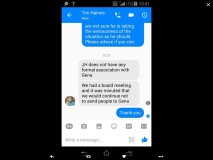
Tim confirms JFF had a meeting and agreed to continue ‘not to send’ people to Gena. What was discussed at that meeting?

Why did JH buy Gena a caravan to house other parents if JFF weren’t sending them?

How much money has JFF/JH/IJ paid to Gena Not answered Gena says JH paid for a caravan at her address in France where parents could stay
If they paid her money, what was it for? Not answered
Is source of money donations from public or from private purse of JH/IJ? Not answered We need to know if members of the public are being solicited for money by JFF
What checks/risk assessment do they carry out Claims they have never sent any parents to Gena so never needed to assess her But JH has clearly advised a parent to go to Gena’s. So this response is untrue and we need to know more about their assessment process.

Why did JH buy Gena a caravan to house other parents, if JFF wasn’t sending them?

What did they know about the conditions at Gena’s house Claims never sent any parents there so wouldn’t need to know. So what on earth was being discussed at the meeting about Gena? Why does Tim say that JFF gave advice NOT to go to Genas? What did they know, and when did they know it?
When did they know that mothers were complaining about abuse and theft at Genas? Not answered Again, we need to know when the meeting was at JFF about Gena and what was said
When did they know that Gena was living with a man who poses a clear sexual risk to children? Not answered Again, we need to know when the meeting was at JFF about Gena and what was said
Do JH/JFF/IJ refer ‘mums on the run’ to any other people? Claims not. This is not supported by what others say. JFF need to be utterly open and transparent about their activities in this regard.


Some other issues

Attempts are now being made to show that the mother’s who have raised this issue with me are themselves mentally unwell and unfit parents.

So I ask JFF very clearly. You say you didn’t assess Gena because you weren’t sending anyone to her.

Then why were you advising and helping mothers to leave the jurisdiction that you are now describing as mentally unwell and unfit parents?

Just how many families have you helped leave the jurisdiction?

Gena says John Hemming has sent her 4 families.

Is this true.

Please be open and honest about what you are doing. Vulnerable children – and vulnerable mothers – are being put at considerable risk of harm by those who persuade them to leave the jurisidiction. If JFF and its advisers really are able to offer a good quality legal representation for parents, if they are ‘winning’ so many cases, then they don’t need to encourage parents to ‘flee’.

‘Mums on the Run’ – Where do they go? How safe are they?

For some time now I have been talking about and worried about the network of people who help parents leave the country if they are facing care proceedings. I am not convinced they are motivated by wanting to help people. I think they are more interested in showing they can get one over the ‘system’.

I have written about this before, particularly about how worried I am about John Hemming and Ian Josephs – who has given money to Marie Black, a convicted paedophile. I discussed their activities in more detail here:  ‘Helping Parents Leave the Jurisdiction’.

John Hemming set up ‘Justice For Families’ [JFF]  an organisation that;

campaigns to improve the operation of the family courts (including the court of protection) in order to treat families with respect.

John Hemming has often advised people to leave the country as they won’t get a fair hearing here – see Panorama ‘I Want My Baby Back’ in January 2014. There was a post on his blog in July 2015 about ‘mums on the run’ but that blog post no longer exists. The URL reads ‘Gena-and-kerry-mums-on-run-in-france’ [URL is an acronym for Uniform Resource Locator and is a reference (an address) to a resource on the Internet.] There is a reference to it on the ‘Brummie.net’ site which confirms the name ‘Gena’. 

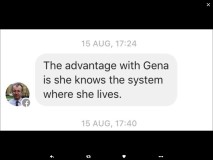
So I am going to assume that John Hemming knew about someone called Gena in 2015. I am also going to assume that John Hemming has been promoting Gena as a safe ‘host family’ in France for the ‘mums on the run’ as  I have seen Facebook messages from John Hemming to a parent saying:

‘Why not go to Gena’s?’ …’The advantage with Gena is she knows the system where she lives.’

EDIT – the link between John Hemming and Gena is beyond doubt. Also, he knew that she had reported her partner as aggressive. See this article from the Sunday Times in December 2015. 

Out of the frying pan and into the fire

I have recently been given some very disturbing information in copies of texts, emails and Facebook messages from three different parents who have had first hand experience of being ‘mums on the run’. All went to a house in France occupied by ‘Gena’ and her partner.  All were given the details by John Hemming and/or Ian Josephs.

The mothers speak of horrible conditions in the house. Of being physically and verbally abused and having money either taken from them or not given to them so they could not buy even nappies for their children. One mother had to call the French police; the French authorities are now apparently investigating Gena.

I am told that one of the mothers told John Hemming and Ian Josephs about what was going on.   I have seen a message to one parent from Tim Haines [one of the JFF Advisors] saying that JFF held a meeting and said they would no longer refer parents to Gena. I don’t know when the date of that meeting was or what actual discussions were had. It would be interesting to know.

Even more disturbing information came to light in September 2016. That Gena’s partner, who lives in the house with her, was found in court proceedings in the UK to pose a sexual risk to children. 3 children between the ages of 7-14 have made allegations that he sexually abused them.

Questions that need to be answered.

I am seriously worried about this.  I have challenged Ian Josephs many times about what information he got about the parents he helped to leave the country and whether or not he followed up their cases once they had left. He carries out no risk assessment and no follow up. He has already given money to one mother who went on to be convicted of really serious crimes of sexual abuse against children.

But now it seems the problem is even bigger and even more dangerous – not only do John Hemming and Ian Josephs have little interest in the backgrounds of the parents they help leave the country, these vulnerable mothers are being encouraged to go somewhere which is not safe. Not for them or their children.

I have for a long time now accused John Hemming of not caring much for the parents or children he claims to ‘help’. I have said that he is more interested in promoting his own agenda. If I am wrong about that, no doubt John Hemming could assist me understand his actions/motivations better, by answering the questions I set out below.

I hope that someone does not have to get seriously hurt or abused before people start taking this seriously.

  • When did JFF/John Hemming/Ian Josephs start sending parents to Gena’s house?
  • How much money has JFF/John Hemming/Ian Josephs paid to Gena?
  • If they have paid her money, what was that money for?
  • Is the source of that money donations from the public or is it privately funded by either/or John Hemming/Ian Josephs?
  • What checks/risk assessment did JFF/John Hemming/Ian Josephs/ carry out on Gena and those living in her house before advising other parents to go there?
  • When did they know that conditions at Gena’s home were not acceptable?
  • When did they know that mothers were complaining about physical and verbal abuse and having their money taken/not given?
  • When did they know that Gena was living with a man who poses a clear sexual risk to children?
  • Do JFF/John Hemming/Ian Josephs refer ‘mums on the run’ to any other people abroad? If so, what checks/risk assessment have they done regarding these other people?

If you are a parent who is thinking about leaving the country rather than face care proceedings PLEASE be careful. PLEASE be wary of people offering to ‘help’ you – they may not actually have your best interests at heart at all. PLEASE get some good advice from someone you trust.

There are some links here to organisations/people who may be able to help you.


EDIT – some screenshots to support information given above.

Further, link to video from BBC programme in Feb 2015 where Gena states she was hospitalised by her violent partner.


Mums on Run Screen shot 1


Mums on the Run screen shot 2

EDIT BBC programme 26th September 2016 – further interview with Gena. She takes 8 families a year. And she isn’t going to stop.


Some strategies for dealing with on line harassment.

This post arises out of a recent discussion on Twitter about effective strategies for dealing with on line behaviour from others that you perceive as harassing or threatening. This is the product of my years of exposure to some very harsh on line environments. I hope its helpful, but of course, it is the result of my own particular experience, it may not resonate for you. In which case, ignore it. Or add some comments and suggestions of your own. 

I have been active on ‘public electronic communications networks’  (for e.g. Twitter) since 2011. My communication style has changed over the years; I hope for the better. I am have become less sensitive to challenge and better able to set appropriate boundaries around my own and other’s behaviour.

At the same time, I have become increasingly concerned about the way people chose to communicate on line. Abuse, aggression and harassment are increasingly common. Those in charge of social media platforms appear to have limited ability and/or willingness to control it.

The upsides of social media are significant – without Twitter for e.g. my opportunities for exposure to other disciplines would be greatly reduced. it would be a shame to lose the opportunity offered to share and explore ideas with many others because you are driven off the internet by the aggression or abuse. So, it’s worth spending some time to think about how you handle people who are abusive on line.

Freedom of speech is a vital component of any civilised society and protected by Article 10 of the ECHR. You are going to have to put up with some exposure to those who say things you don’t like. But the right to freedom of expression is not limitless. The freedom to say outrageous things is not (as some would appear to assume) a duty or a compulsion to say outrageous things. The limits to freedom of speech are rightly set by the law; for example, you cannot defame someone with impunity, you cannot racially abuse them or threaten to rape them without consequence.

Those more extreme abuses of freedom of speech are easy to spot. What causes the problem is that one person’s robust and necessary contribution to a debate can be interpreted by another as offensive or harassing.

So what can you do to improve your on line experiences and/or deal more effectively with those people that you find offensive? I am not suggesting by ‘resilience’ that everyone simply ‘toughen up’ and simply laugh off or ignore disgusting behaviour on line. On the contrary, I believe that such behaviour should be challenged and I am confident I have the necessary personality traits to enable me to engage in such challenge without disproportionate cost to my own emotional well being. But challenge and confrontation doesn’t work for everyone and every situation; you will need to consider other strategies and approaches.

I offer some below.

Know Thyself

Know yourself. Why are you on line? Who is your audience? What do you want to communicate? If you are engaging in debate about controversial issues or ones that encourage polarised and strong views then you are going to meet people who don’t agree with you and who won’t be shy about saying so.  If you find it difficult to deal with disagreement or confrontation in real life, the impact of this will be magnified ten fold on line. The combination of anonymity and distance from the recipient of abusive behaviour – ‘the on line disinhibition effect’ – often results in an increase in the intensity of people’s reactions.

Know what you are dealing with

The increase in intensity of reaction is of course a two way street. What you perceive as abuse or harassment, may be a reflection of your own strong feelings about a topic and your resistance to being challenged, particularly if the challenge is made in a blunt or aggressive way.  As much of interaction via social media is written, a significant part of necessary information we need to understand another’s intent is lost; most particularly tone of voice and facial expressions. It is not surprising therefore that the nuance of a discussion suffers. Combine this with what appears to be the natural human predisposition to discern threat where none exists and it is not difficult to understand why so many on line engagements go sour so quickly.

I think problems with on line communications involve 4 broad categories of people, and its important to try and identify which is which, as this will inform the remedy you chose.

  • The Trolls – the true dark side of social media are those who have no genuine wish to communicate but instead gain satisfaction or sense of purpose from abusing others.
  • Ineffective communicators –  those who genuinely wish to communicate but who are overwhelmed by emotion or circumstances that they cannot do so effectively.
  • Ineffective response to challenge – those who are particularly sensitive to challenge and react accordingly.
  • Basic misunderstanding – those who would have had little difficulty in communicating face to face but who misinterpret each other’s motivations on line due to absence of social cues.


But protect yourself

Criminal remedies

If the behaviour on line is serious enough to make you afraid for your safety then inform the police. Recent initiatives indicate that the police hopefully understand the need to engage more effectively with internet ‘hate crimes’ but we are still all finding our way and the responses of various police forces may vary in speed and effectiveness.

Harassment is both a criminal offence and a civil action under the Protection from Harassment Act 1997. The police can ask offenders to sign ‘Police Information Notices’ or ‘Harassment Warning Notices’ to show in possible future legal proceedings that a suspect was aware that their behaviour would count as harassment.

In general, ‘harassment’ is behaviour that a reasonable person would agree would cause you distress and alarm. The offence of harassment occurs where:

  • there has been a “course of conduct” (not just one event); and
  • the perpetrator knows or ought to know that their conduct amounts to harassment.

The police can also consider the Malicious Communications Act 1988 but as the age of that Act suggests, it wasn’t drafted with social media/online harassment in mind and is not a particularly useful tool.  See this guidance from the CPS about prosecuting cases involving communications sent via social media.


Some strategies to deal with behaviour that probably isn’t criminal

If the behaviour you are worried about however, is not so serious that it is likely the police will consider it a  criminal offence, then you have to make a judgment call about what is going on and what you are going to do about it.

Have you considered the intensity of your own reaction to an on line challenge and are confident that others would agree that the other’s behaviour is unacceptable? For example, they use foul language, derogatory terms or repeatedly contact you after being asked to refrain. Being subjected to this is emotionally draining and often very upsetting. You owe it to yourself to set and enforce boundaries to protect your own wellbeing.

I suggest the following strategies

Ignoring

This is often the most effective strategy for a wide range of offensive on line behaviour. Many who troll do so to feed off the emotional response of their victims; the more upset you get and the more you show it, the better they like it. Ignore them and they will often move on to another victim.

I personally don’t like this strategy as it doesn’t sit well with my inherent combative tendencies and I don’t see why they should get away with it. However, in some circumstances ignoring is objectively not a sensible strategy, if it allows people to claim you do not take seriously criticism of your activities or integrity. You may have no choice but to engage.  I therefore I often try the strategy of polite/persistent engagement.


Polite/persistent engagement

This has proved remarkably effective over the years. The true troll will get bored or annoyed very quickly and move on. Those who have genuine motivation to engage but who have been temporarily swept away by the intensity of their own reactions, can often respond well to this and I have managed to form some relationships of at least grudging mutual respect by this method.

As Lindy West comments

I feed trolls. Not always, not every troll, but when I feel like it—when I think it will make me feel better—I talk back. I talk back because the expectation is that when you tell a woman to shut up, she should shut up. I reject that. I talk back because it’s fun, sometimes, to rip an abusive dummy to shreds with my friends. I talk back because my mental health is my priority—not some troll’s personal satisfaction. I talk back because it emboldens other women to talk back online and in real life, and I talk back because women have told me that my responses give them a script for dealing with monsters in their own lives. And, most importantly, I talk back because internet trolls are not, in fact, monsters. They are human beings—and I don’t believe that their attempts to dehumanize me can be counteracted by dehumanizing them.

But its time consuming and requires patience. You are going to need to be confident that you can do it otherwise you are simply increasing the burden on you.


Refer on to other agencies

If its getting bad, you have the option to refer a complaint to the social media provider. For information about Facebook complaints procedures, see here; for information about Twitter see here.

I have never tried this, however, anecdotes from those who have, suggest that this isn’t going to be a very effective or swift remedy.  Is there anyone you can raise a complaint with – such as the moderator of a forum discussion or the administrator of a Facebook page?

(EDIT – I have now tried this and complained to Twitter. My complaint has so far been ignored so I am now even less confident this route will have any success generally. Twitter, in particular is a social media platform that appears to elevate ‘freedom of speech’ above all else, even when that ‘speech’ is designed to do little else but cause alarm and distress).

Some professions – such as barristers, solicitors and social workers – are ‘regulated professions’ which means you could complain directly to their regulatory body about their behaviour on line, if of course they are identifiable. For more information about such complaints, see this post.

Civil law remedies

You have the option of applying for an injunction/damages under the Protection from Harassment Act or seeking to persuade the court that you have suffered defamation.

You will need to be very confident that it’s worth it. No legal action should be undertaken without serious thought. It will bring with it financial and emotional consequences, even if you win. I discuss defamation in more detail in this post. Its worth quoting again from Mr Justice Warby:

Defamatory imputations can cause injury to feelings which is out of all proportion to the harm they cause to reputation. That, so far as the earlier publications are concerned, is this case. So far as the later publications are concerned, and more generally, Mr Economou has made the error of seeing this case from his own perspective as a victim, paying too much attention to the impact on him and his feelings, and giving insufficient consideration to the other perspectives, indeed the other rights and interests, that demand and deserve consideration.

As I know now from bitter personal experience, even sending a few letters from your solicitors to theirs is going to cost thousands of pounds.  The cost to your emotional welfare may be yet higher as even contemplating such legal action can absorb much of your time and energy. Don’t even start unless you have a clear idea of what it is likely to cost you. Trying – and failing – in court can also carry the risk that you have to pay some or all of the costs of the other side.

Getting evidence

If you are being harassed on line hopefully you can get screen shots’of any abusive posts/tweets etc. ‘Screenshot’  is the term used to for taking a picture of whatever is on the screen of your computer/phone/tablet etc. You don’t need any special software as all devices/operating systems should let you take a screenshot.

However, it may be that a screenshot by itself will NOT be considered good enough evidence. You will need to be able to show that the screenshot is genuine and you haven’t tampered with it. One way to do this is make sure that you have the URL for each screenshot. This is an acronym for ‘Uniform Resource Locator’ or a ‘web address’. It specifies a location on a computer network and a mechanism for retrieving it. Or you can use the web archive/wayback machine to save the URL.

I am grateful for the advice of one reader ‘Mr X’ who has provided the following advice to help you get useful evidence about any online harassment:

http://getfireshot.com/using.php#editing << that is the program I use for my screenshots (Fireshot) – it’s a bit hard to explain in an email how to take the screenshots. I basically find the tweet I want to capture by clicking on it, when you do that, at the top in the browser is the tweet url (https://www.whatevertweet.url etc) use fireshot to capture the tweet, in fireshot there are tools, I use “capture visible area”, then use “crop” tool, so I end up with just the tweet, then I highlight the tweet url (which is on your browser window), right click “copy”, go to the screenshot and choose where I want to put the url text, right click “paste” – then I save it. It took me a while to get the hang of this program – now it takes me a few seconds to do the screenshots as I’ve used this program for 7yrs!!
The web archive/wayback machine is what takes the time – this is the link https://archive.org/web/web.php – if you look towards the right hand side of the page there is “save page now” and the box where you paste the url link into, the webarchive starts to save the page “as is” – once it’s saved there is a new url which has “webarchive etc etc whatever url” – sometimes it can take up to 4mins to save one tweet, you can’t put multiple urls at once, they have to be done individually.
I don’t know what operating system your computer is, but there is a Windows feature called “snipping tool” – I use that sometimes when I don’t need to put the url’s on screenshots.

Take care of yourself

Don’t engage in on line debate/discussion if you are feeling particularly angry or upset about something. Take a break, check that you are not tired or hungry. Don’t make any quick decisions, don’t respond hastily –  unless of course it is so serious you need to call the police. Don’t use offensive language or bring yourself down to their level. it is very difficult for outside agencies to ‘un pick’ who is the main offender when both parties are engaging with each other using abusive terms.

Further reading

Lindy West ‘What happened when I confronted my cruellest troll’ 

Anna Merlan ‘ The cops don’t care about violent online threats. What do we do now?’

The Guardian Experience ‘I was an Internet Troll’.

Google’s response to a defamation claim

Psychology Today ‘No Comment: 3 Rules for Dealing with Internet Trolls‘.

Inforrm article about the case of Smith v Unknown Defendants [2016] EWCH 1775 ‘Defamed by Persons Unknown’. The court awarded damages in defamation of £10,000 – but did Mr Smith ever get his money?

Article by NZ barrister Steven Price ‘The Defamation Minefield – 12 Steps to help you avoid it’

What you need to know about gathering social media evidence 

The National Stalking Helpline 0808 802 0300

Fascinating article by J Nathan Matias about what Victorian efforts to deal with food adulteration can teach us about developing tools for dealing with on line abuse.

Online harassment research guide – research on understanding and responding to online harassment.

Growing social media backlash among young people – report in the Guardian 2017

Excellent Twitter thread on why this platform tends to shy away from dealing with issues of abuse on line

https://twitter.com/yonatanzunger/status/914605545490857984

Care proceedings: UWE Research into the pre-proceedings protocol

A research team at the University of the West of England  (‘UWE’) have been conducting some research into the pre-proceedings protocols introduced by HHJ De Haas QC in Cheshire & Merseyside in July 2012 and by HHJ Wildblood QC in July 2013.

The Team reported to the President of the Family Division in March 2014 and wrote a short article for Family Law which was published in July 2015. The research included talking with professional stakeholders and analysing raw HMCTS data and Children’s Services’ files.

The Team would like to update their material generally and would be very interested to talk to any parents or young people who have experience of, or views about, the pre-proceedings protocol in care proceedings.


If you would like to talk about your experiences, please contact Emma Whewell <Em**********@****ac.uk>  who can give you more information, including information sheets and consent forms if you wish to be part of the research.

Who Guards the Guards? Expert witnesses and abuse of power

I am grateful for this post from one of our readers, who shares her own experiences of being assessed by an expert witness and her concerns about those in positions of authority who abuse their positions of trust. She raises some important issues regarding potential consequences that can flow from a relationship where the balance of power is weighted so heavily against the parent. 

I AM therefore I CAN (with apologies to Descartes)

I recently read a blog post on Twitter by @suesspiciousminds. It was about an expert, a clinical psychologist who had misrepresented comments made by a mother and a child in public law care proceedings. In his blog, @suessspiciousminds writes:
“I am genuinely shocked by this. It undermines a lot of credibility of expert witnesses”

Sadly, I am not at all shocked by this. I was up against an expert in his field, a psychiatrist who not only assessed mothers facing care proceedings but who was also an expert witness. For reasons known only to himself, he wanted to have my children put up for adoption.

It started off with an allegation. A false one. My then husband and I had a row over money. We had two children aged 5 and 7 weeks. I was the only one earning at the time and under huge strain to get back to work as I was self-employed and we faced eviction. My husband had been promising for a while that a client would pay him. I found out it was a lie and so we rowed.
It was an almighty row – not physical but a lot of shouting. As he stormed out of the house, I shouted at him not to bother coming back until there was money. An hour or so later, the police came knocking on my door. My initial thought was that my husband must have died in a car accident, such was the speed with which he drove off. I was wrong. The policemen wanted me to come to the station to answer some questions. They would not tell me anything else. My 7 week old baby was already in the car seat asleep as I had intended to drive to see the landlord and plead with him not to evict us.

We were put in an interview room where we stayed all day. Every so often a police officer would walk in the room and tell me that my husband was doing his statement, that when he had finished, they would ask for mine. I remember not being worried. I was desperate to speak to the landlord and saw this as a hurdle to a more pressing problem. My husband lied. It was what he did and they would see it for what it was. At the time I did not know what ‘it’ was.

I started to get anxious after 3pm as my older child was due to finish school. It was all taken care of, the police officer told me. Arrangements had been made for my child to be picked up but they would not tell me what those arrangements were or how much longer I would be. They just kept repeating the mantra: When my husband had finished with his statement, they would ask me for mine. By this point I was getting scared. Why was his statement taking so long? What was he saying? He lies, that’s what he does I kept repeating to myself. They’ll find out.

At maybe around 5 to 6 pm, a police officer came into the interview room that my baby and I had been kept in all day. He told me that my baby was going to be checked over at hospital. I stood up as I fully expected to go too but one of the officers put his hand on my chest and pushed me roughly into a chair.
“You’re not going anywhere” he said.

At this point I became really alarmed as I watched my 7 week old baby being taken away by an officer as the other one kept me firmly in the chair. I started crying, “I need to go with my baby, I’m breastfeeding” I was still sobbing when some moments later the door opened. Two people walked into the room, looked at me crying, went back out. I could hear whispering behind the door. When it did open, I was sectioned under the Mental Health Act. I still had no idea what my husband had said.

In the psychiatric ward, I asked for a solicitor and a breast pump. I was told I could ask for a solicitor at 9 am the next morning but was denied a breast pump. “You won’t be needing it where you’re going” the midwife said to me.

By 11am the following morning, I had a solicitor to appeal the detention, a visit from a social worker, a family solicitor and a breast pump. I then found out my husband had alleged I had thrown our 7 week old baby across the room, that I had a history of severe psychiatric illness including schizophrenia. It was actually my sister who was schizophrenic. I also found out that my children had been taken to a foster carer at a secret location as I was deemed too dangerous to know their whereabouts. I asked why the children weren’t with their father. The social worker told me that anyone who leaves a 7 week old baby with someone who has just thrown them across the room was just as guilty.

I was under 24 hour observation to spot signs of aggression and mental illness for 2 weeks, until the appeal hearing. The hearing took less than 10 minutes. They had acted on information giving to them by my husband and they had failed to verify. My 7 week old baby was healthy and well looked after and I did not have a mental illness nor showed any signs of aggression.

End of story? Not quite.

I was told that proceedings had started and it would take about a year before the children could come home to me. I would need to be assessed with the children. The Guardian insisted that I be sent to an extremely expensive residential assessment centre which was run by a highly qualified psychiatrist who was also an expert witness to the court. The children and I would be there for a month.

The psychiatrist lived next to the assessment centre but, apart from watching him jogging, or seeing him when he came into the kitchen to use the washing machine, we hardly ever saw him. It was not until about the 3rd day that I had a ‘session’ with him. I walked into his office and the first thing he said was “You don’t like me, do you?”

I was thrown by this comment and all I could say was; “I don’t think it’s a question of whether I like you or not, I think it’s a question of whether we can work together.” Apparently it was not the answer he was looking for. Observations were done by the (largely) unqualified staff and he would then look over their notes and make his assessments from those notes and the weekly sessions he had with the residents. In my next session he spent the whole time telling me that my husband had not lied and that I had made it all up, refusing to believe me but then ending the session with “If it’s too good to be true it’s not true”. I felt as though he was trying to catch me out, as though there were answers he wanted to hear that I was not giving him. I could only answer as I felt but it felt wrong.

To pass the time, I baked bread and would bake a loaf daily for all the residents to share. One morning a staff member told me that he had cut the loaf in half and taken the half with him. That was the day he chose to keep coming in the kitchen – something he never did. He was obviously expecting a reaction from me so I told him that I had made the bread for the residents and that if he wanted some he should have asked as it meant there wasn’t enough to go round. Perhaps, not surprisingly, that did not go down well. I failed ‘the test’ again when he came in from his customary jog and put his running shorts in the washing machine. He had left his phone and car keys in the pocket and I burst out laughing.

I later found out that it was all deliberate (perhaps not the car keys/phone). He liked to press the residents’ buttons to see how they would react under pressure. This would include giving us various tasks. Asking us to do things when the children were hungry or upset or tired. He would probably justify it as making sure the mothers could cope with day to day life. I got a feeling that he had more than a sadistic streak to him.

The Court hearing was heart stopping. This ‘expert’ psychiatrist diagnosed me as of below average intelligence and it was his recommendation that my children would be best placed if they were put up for adoption. The Guardian agreed with him. The Local Authority did not.
On the day, of the hearing, the Guardian, Local Authority, and the lawyers had a meeting which excluded my solicitor. I remember my barrister, who had caught a train from London so arrived after everyone else, walking straight into their meeting saying something about not having a meeting without him.

I believe that in that meeting, the Guardian was trying to convince the Local Authority that my children should be put up for adoption. In Court, the Local Authority did not agree with the Guardian and the ‘expert’. The Judge agreed with the Local Authority.

I came so close to losing my children permanently based on I don’t know what reasoning. What I do know is that there are people in positions of power, who are trusted by the Court, in their capacity as experts in their field, who exploit and abuse that power. In the case of this psychiatrist, children were removed from mothers he diagnosed as mentally ill, as unable to parent. How many of these mothers were, in fact, capable?

Bullies and abusers use their position of power to intimidate those who, often, are unable to fight for themselves. I was incredibly lucky that a social worker was able to stand up to not just the Guardian but an expert’s opinion. But where this is not the case, who is there to keep us safe from the experts?

Freedom of Speech v Barbara Hewson


On May 25th the internet magazine Spiked published an article by Barbara Hewson  – The family courts make a mockery of justice‘. She published a tweet with a link to that article. I saw this and attempted to enter into discussion with her on this public forum, as one of the family lawyers she had dismissed en masse as ‘collusive’ and ‘incompetent’. Her response was immediate and aggressive, she told me to go to bed and ‘blocked’ my account. I responded in manner that was mocking and rude. I am sorry about that. It was fun at the time but it wasn’t constructive and it did nothing to bridge the gap between our positions.

I published a more reflective response via my blog on May 27thThe woeful state of our debate about the family courts part 7: Barbara Hewson’

If I thought Ms Hewson’s initial response to my tweets was bizarre, what followed this blog post was even worse. She made two formal complaints to my Chambers and – astonishingly – directly tweeted a number of prominent Jewish lawyers and journalists to inform them I was an Anti-Semite. She later deleted those tweets – suggesting she realized she had gone too far. But of course, on the internet nothing is ever really deleted. 


Freedom of speech – not just for the speech you agree with.

However, a much more serious issue emerged from our unedifying ‘spat’. This was Ms Hewson’s determined efforts to reduce the audience for my blog post. To understand my concern, it is important to note that Ms Hewson is not your typical abusive keyboard warrior, with limited following or influence.  Not only is she a practising barrister, she is also a prominent contributor for Spiked.

Spiked describe their ‘mission statement’ in this way (emphasis added):

It’s the publication that puts the case for human endeavour, intellectual risk-taking, exploration, excellence in learning and art, and freedom of speech with no ifs and buts, against the myriad miserabilists who would seek to wrap humans in red tape, dampen down our daring, restrain our thoughts, and police our speech.

Well said. If ‘freedom of speech’ is reduced to ‘freedom to say things I agree with’, it is no freedom at all. Sadly, Ms Hewson does not seem to share Spiked’s enthusiasm for freedom of speech. She alleged that my blog post was both ‘inaccurate’ and ‘defamatory’. However, and interestingly, she didn’t make those allegations directly to me or request that I amend the post or take it down.

Shortly after publication of my post on Friday 27th May I sent a tweet with a link, as is my normal practice. It was retweeted by a number of others.

Ms Hewson sent an email to those who retweeted on Bank Holiday Sunday May 29th, demanding that they ‘un-do’ their retweet. When some of the recipients asked – not unreasonably – to be informed what exactly was defamatory about my post, Ms Hewson not only refused to give details but replied to say that she would consider joining them in her proposed legal action against me. And this could carry consequences in terms of costs.

Entirely unsurprisingly, that threat worked and my tweet was subsequently ‘un-retweeted’.

Then, in the second of her formal complaints to my Chambers, Ms Hewson declared that she was giving serious consideration to informing the police of my activities on Twitter.

After I had picked myself up from the floor, to which I had fallen laughing, I got quite angry. This was after all quite an effective tactic of intimidation. Not because she frightened me, but because she was now putting my Chambers to considerable annoyance and fuss in attempting to sort out a complaint that – in my view – was without substance and which should never have been made. The suggestion that anything in my conduct on line or elsewhere merited the involvement of the police was absurd. That the suggestion was made by someone in her position is very worrying.

The Streisand effect

Ms Hewson’s efforts at indirect censorship did not have the desired effect of keeping my views out of circulation. She seems unhappily ignorant of the Streisand effect, where there is a direct correlation between the efforts you put in to keeping something hidden and the extra publicity for the hidden thing you generate by those very efforts.

Between May 27th and June 2nd that ‘defamatory’ post was the most popular on my website. And people weren’t just glancing at it – they were reading it. The post was seen 553 times during that period and the average time spent on the page was 6 minutes and 16 seconds. My original tweet containing a link to the blog post has now been seen 2,043 times and is my third ‘top tweet’ for the month of May. To put this in context, my tweets usually get about 300 impressions. The blog post has been ‘shared’ on line 242 times.

I have no idea how that compares to the analytics for Spiked on line. But its pretty good for my site.

Through out all of this I remain in the dark about what is defamatory about what I wrote. I suspect it is not that Ms Hewson is unwilling to tell me – but that she is unable to tell me. Because my original blog post isn’t defamatory. And I am more than happy to defend it in open court.


Debate and discussion – now dead in the water?

But what on earth are we coming to when the honest expression of an opinion about something significant – the family court system – meets with this response? This means that the debate about the family justice system isn’t merely ‘woeful’ as I have long feared, but is dead in the water.

For those who seek a public platform to publish and promote their views, bravery must go hand in hand with good judgment and reflection. Otherwise ‘bravery’ can easily slip into bullying cruelty on line or even worse – into a reckless assault upon our essential freedoms. The greater the status and influence of the person seeking to restrict others’ freedom of speech, the greater the danger that person poses.

Of course our freedoms are not limitless. The rights of your fist end where my nose begins. We have to engage in constant and sensitive recallibrations of our freedoms and our responsibilities and how they intertwine.

But I suggest that any attempts to limit the activities of your fist vis a vis my nose should come from the law , not the wrath of an individual. The criminal law can deal with threats and harassment, the civil law can deal with defamation. A further avenue for those of us in regulated professions can be to make complaint to the appropriate regulatory body.

Respect for essential freedoms cannot turn simply on whether a particular individual is upset and offended. The evil consequences of that are very clear. I agree Ms Hewson’s right to be wrong must be protected. I have disagreed with her – not attempted to silence her or get her arrested.  But sadly, it seems she does not accord me the same respect and seeks to erode my freedom of speech in a particularly heavy handed and unpleasant way.

Bullying isn’t great – but hypocrisy is worse

Ms Hewson’s attempts to intimidate do not deflect me. At the time of writing it’s June 17th (and at the time of publication it’s August 13th 2016) and I haven’t been arrested or received any court papers, so I will assume her threats are empty. But I also reasonably assume that others of less robust temperament in my shoes over the last few weeks would have been very frightened and distressed. Even a cursory search of her name on Twitter shows that many others already have been frightened and distressed by her behavior on line.

Spiked may value this kind of behaviour from Ms Hewson as adding to their ‘edgy’ reputation. But I hope not. Rather, I hope that this whole sorry tale gives them some pause for thought about exactly whom they wish to support as a contributor to their site.

The family justice system impacts on the lives of many. It tries to protect the vulnerable against the imposition of unfair or abusive interference with their private lives, from either the State or other individuals. That it functions well is necessary. That it often falls short of what we need is sadly clear and worthy of debate.

No one has the right to try and stifle open and honest debate about something so important. Not least someone who claims to support freedom of speech.

I can understand, in a world where humans routinely make decisions to bomb children and hospitals or permit the mentally ill to buy military grade assault rifles to more easily murder cartoonists or gay people, my ruffled feathers over this may seem to some quite unimportant.

And you are entitled to that view – I won’t threaten you or telephone your boss if you express it. But I think it is important to challenge this kind of behaviour. Because this is how our essential freedoms are eroded, little by little and drop by drop. Until when the time comes that we wake up to what we have lost, there may be nothing left at all to defend.